Unstable Icefall Halts 410 Everest Aspirants as Officials Await Melt
An unstable serac on Mount Everest's climbing route has stalled 410 foreign permit holders. High avalanche risk delays ascents as officials monitor glacial conditions.
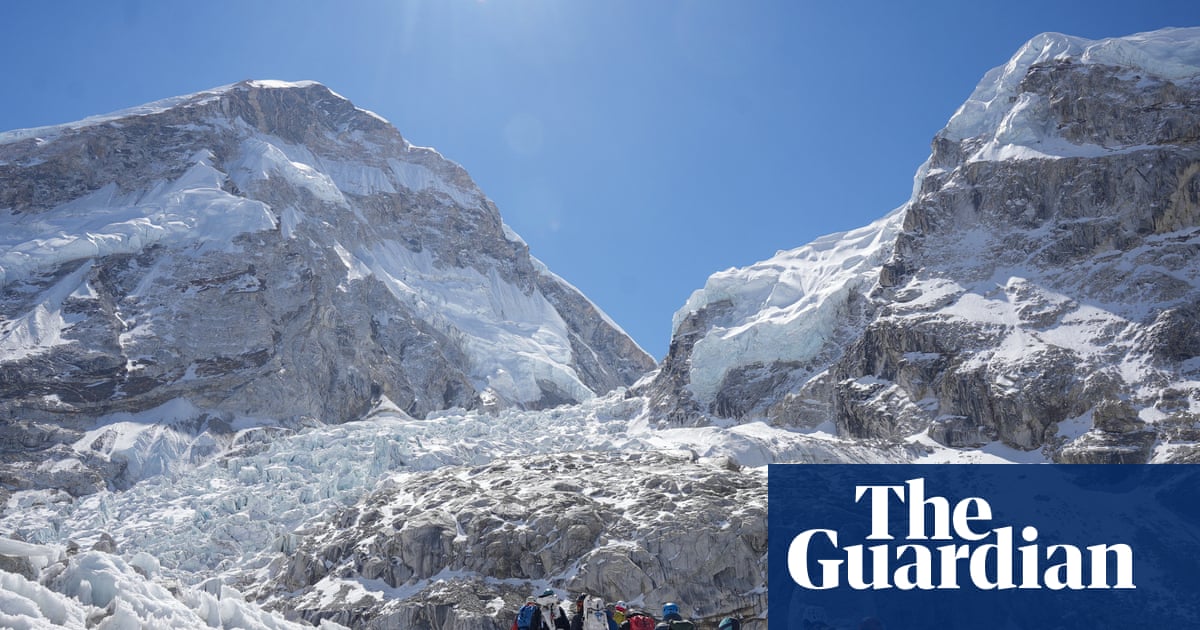
An unstable ice block, or serac, above Mount Everest's base camp has halted 410 foreign climbers holding permits for the spring season. Officials await the serac's melt to reduce significant avalanche risks, impacting hundreds of planned ascents.
Four hundred ten foreign climbers now face an indefinite delay on Mount Everest, held at base camp as conditions above them remain precarious. An unstable serac, a large block of glacial ice, poses a significant hazard on the crucial climbing route just above Base Camp. This situation directly impacts a substantial portion of the 2024 spring season's ascent attempts, a period known for its brief windows of favorable weather.
Officials confirm the serac, located between Base Camp and Camp One, presents an unstable risk to all climbers. This particular section lies within the notorious Khumbu Icefall, a constantly shifting glacier featuring deep crevasses and towering ice formations, some reaching the size of 10-story buildings. The Khumbu Icefall is widely considered one of the most challenging and dangerous parts of the Everest ascent, requiring specialized routing by experienced "icefall doctors." These elite guides, responsible for establishing the climbing path with ropes and ladders, typically complete their work by mid-April. However, the current instability prevents their progress this year. Nepal's Department of Mountaineering has issued permits to 410 foreign climbers for the current spring season, which usually concludes by the end of May. A high avalanche risk persists in the area, and teams are waiting for the serac to melt down to a safe level before any further progression.
This delay directly affects hundreds of mountaineers, along with an equivalent number of Nepalese guides and support staff, who now face mounting financial and logistical challenges. The decision to halt all progress underscores the extreme inherent dangers of high-altitude mountaineering, particularly in such a volatile section. Historical precedent highlights this risk: in 2014, a chunk of this same glacier sheared away from the mountain, triggering an avalanche that killed 16 Sherpa guides. This event marked one of the deadliest disasters in Everest climbing history. With the spring season's brief windows of favorable weather diminishing, the critical time for safe passage and summit attempts narrows significantly for the waiting teams. Thousands of people have reached the summit of the 8,849-meter peak since its first ascent on May 29, 1953, yet each season presents new, unpredictable challenges.
All eyes now remain on weather patterns and the natural melting process. These environmental factors will dictate when, or if, the hundreds of stalled aspirants can safely proceed with their summit bids. The ongoing situation serves as a stark reminder of the unpredictable forces governing the world's highest mountain.
Continue reading
More in this thread
Spurs Coach Says Playoff Physicality Won’t Rise, Stresses Execution Over Aggression
Marcus Cole
Spurs Coach Dismisses Increased Playoff Physicality: "We're not going to be more physical in Game 4."
Marcus Cole
Turkey Set to Host Turkish Grand Prix Again Starting 2027, Securing Istanbul Park Deal Through 2031
Marcus Cole
Conversation
Reader notes
Loading comments...