UK watchdog finds no widespread fuel price gouging despite higher pump prices
CMA says retailer margins unchanged despite higher pump prices; investigation into a few retailers to report in May.
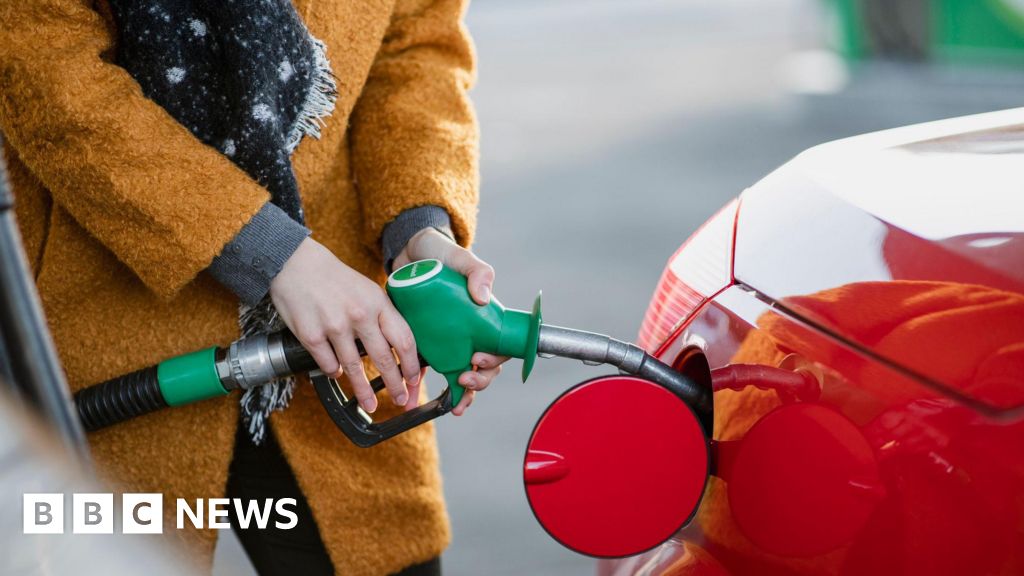
Close up shot of a young woman wearing an orange coat filling her red car with fuel.
*TL;DR: The Competition and Markets Authority (CMA) found no evidence of systematic fuel price gouging in the weeks after the US‑Israel conflict, even though petrol and diesel remain significantly more expensive at the pump.
Context The UK fuel market has been under pressure since the Middle East conflict drove wholesale oil costs to record levels. Brent crude, the global benchmark, topped $126 a barrel – its highest price since 2022 – after the Strait of Hormuz was effectively closed for two months. In response, the CMA stepped up monitoring of forecourt prices in March, warning that rapid price swings could harm consumers.
Key Facts - Retail margins – the gap between wholesale cost and retail price – averaged 10.7 pence per litre (ppl) in February and March, matching last year’s level. The CMA says margins were “broadly unchanged” across the sector. - Two supermarket chains and three independent retailers did see margin increases between February and March; the regulator will investigate the reasons and report in May, according to chief executive Sarah Cardell. - Pump prices peaked in mid‑April at 158.3p per litre for petrol and 191.5p per litre for diesel. Prices have eased slightly but remain 24.2p/litre for petrol and 46.0p/litre for diesel above pre‑war levels. - The CMA notes significant local price variation, with potential savings of up to £9 per tank if drivers shop around. - Earlier research identified “rocket and feather” pricing – rapid price hikes when wholesale costs rise, followed by slower declines – after Russia’s 2022 invasion of Ukraine. The regulator is now assessing whether similar patterns reappear. - The AA reports diesel wholesale costs have fallen faster than pump prices, and motorway petrol can be up to 20p/litre more expensive than on A‑roads.
What It Means The CMA’s findings suggest that, despite a sharp rise in global oil prices, most UK retailers have not widened profit margins to exploit consumers. However, the persistence of higher pump prices reflects broader cost pressures, not retailer profiteering. Ongoing investigations into the few retailers with rising margins and the December‑January margin spike will clarify whether isolated practices exist.
Drivers should continue to compare local prices, as regional differences can still yield noticeable savings. The regulator’s next update in May will reveal whether the identified margin increases signal a broader trend or remain confined to a few outliers. Watch for the CMA’s May report and any policy moves that could tighten competition in the fuel market.
Continue reading
More in this thread
China Grants Zero‑Tariff Access to All 53 African Partners, Lifting Trade to $348 Billion
Elena Voss
China Opens Zero‑Tariff Access to All 53 African Nations, First Apples Arrive
Elena Voss
China Grants Zero‑Tariff Access to All 53 African Nations, Trade Hits $348 Billion
Elena Voss
Conversation
Reader notes
Loading comments...