UK passengers can claim up to £520 for cancelled long-haul flights, but conflict-related delays bring no extra compensation
UK passengers can claim up to £520 for long-haul flight cancellations with short notice. Learn about compensation rules, airline duties, and "extraordinary circumstances."
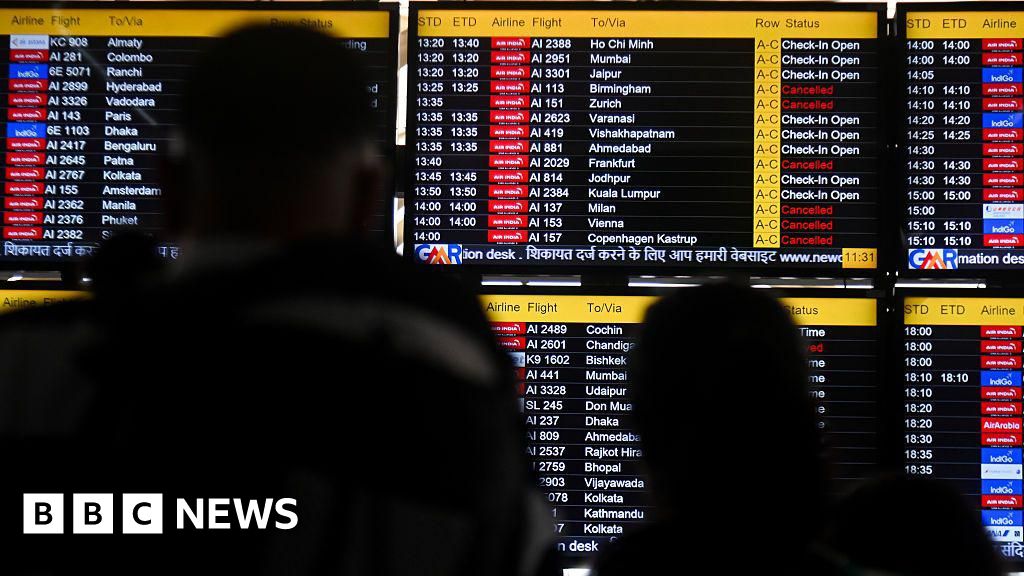
Passengers look at the screen displaying flight details as several flights are cancelled due to regional airspace closures following escalating tensions and reported military strikes involving Iran, Israel, and the United States in New Delhi, India, on March 1, 2026.
TL;DR
UK passengers whose long-haul flights are cancelled with short notice can claim up to £520 in compensation per person. However, disruptions caused by conflict or other "extraordinary circumstances" do not entitle passengers to this additional payment under UK law.
Context Recent airspace closures and rising jet fuel prices, partly driven by the ongoing Middle East conflict, have led to significant flight disruptions. Airlines have adjusted summer schedules, cancelled routes, and increased fares to manage operational costs. Some major UK package holiday providers have cancelled trips, including those with transit through affected regions, leaving many travellers seeking clarity on their rights amidst widespread uncertainty.
Key Facts Passengers can claim up to £520 per person for flight cancellations on routes longer than 3,500 km, provided the airline gives less than two weeks' notice. This compensation aims to mitigate inconvenience when changes occur close to the travel date. Beyond financial compensation, UK and EU airlines must also offer practical support for delayed or cancelled flights. This includes providing meals, accommodation, and alternative flights to the destination at no additional charge to the passenger.
However, not all disruptions qualify for extra compensation. UK law specifies that flight disruptions due to conflict or other "extraordinary circumstances," such as severe weather or air traffic control strikes, do not make passengers eligible for additional financial payments. In these instances, airlines remain obligated to provide care like meals and accommodation, but the statutory compensation framework does not extend to these situations.
What It Means The distinction between airline-fault cancellations and extraordinary circumstances is critical for passengers. While airlines are responsible for rebooking and immediate welfare during any disruption, the £520 compensation applies only when the cancellation is within the airline's control and reported with short notice. Passengers affected by conflict-related cancellations, though not eligible for extra compensation, should still expect airlines to arrange alternative travel and cover essential costs like food and lodging. Passengers should retain all receipts for any self-arranged expenses to facilitate claims. Reviewing specific airline policies and travel insurance details remains important for understanding full coverage options.
What to watch next: Continue to monitor global events and their impact on airline operations, as well as any potential adjustments to passenger compensation regulations.
Continue reading
More in this thread
Surrey Community Grocery Launches £5 Membership to Restore Dignity Amid Cost‑of‑Living Crisis
Elena Voss
French Police Probe Alleged Weather Sensor Tampering After Half‑Million‑Dollar Bets on Polymarket
Elena Voss
Warner Bros. Shareholders Approve $81B Paramount Deal, Putting CNN Under Trump‑Allied Ellison Control
Elena Voss
Conversation
Reader notes
Loading comments...