UK’s First Voucher-Based Food Shop Opens in Devon to Offer Dignity and Choice
Okehampton, Devon, launches a UK-first voucher-based food shop, providing choice and dignity for individuals facing food insecurity. All revenue reinvests into support.
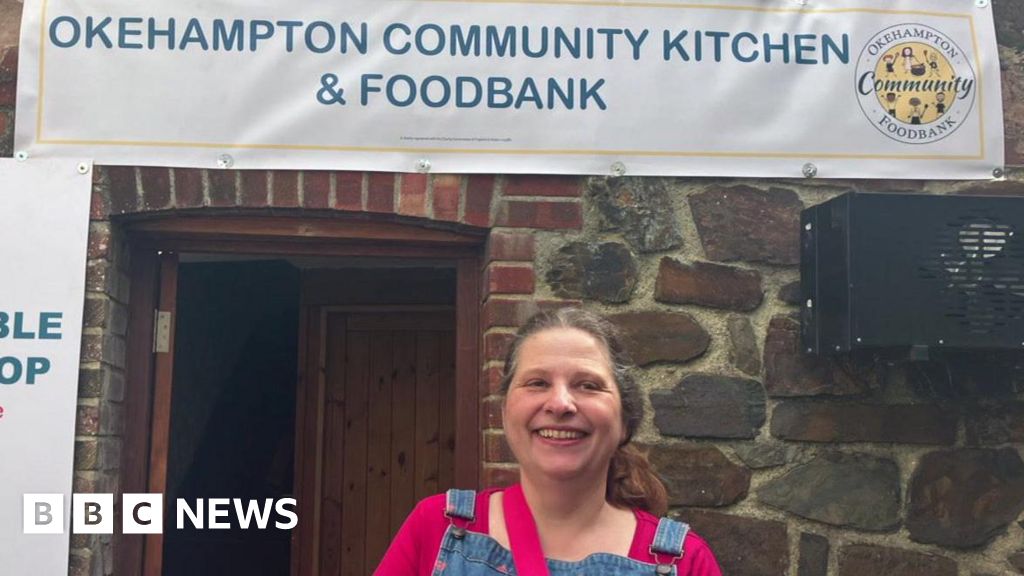
The founder of Okehampton Community Kitchen and Foodbank, Rebecca Green, standing outside the doorway of a red brick building. She is wearing mid-blue denim dungarees with pink hearts embroidered all over them, and a fuchsia pink knitted three-quarter sleeve top underneath.
A new food shop model, which allows customers to choose their own groceries using credit vouchers, has launched in Okehampton, Devon. This initiative aims to provide dignity and choice while addressing food insecurity across the community.
Food insecurity presents a significant challenge for many households. Traditional food bank models, while essential, sometimes limit individual choice and can carry associated stigma. This situation prompts a search for alternative solutions that foster both support and personal agency.
Rebecca Green, founder of the Okehampton Community Kitchen and Foodbank, states this new model is believed to be the first of its kind in the UK. The Affordable Food Shop in Okehampton allows customers to use credit vouchers, enabling them to select specific food items they want. This contrasts with traditional food bank models that often provide pre-packed parcels, thereby offering greater autonomy in food choices. The initiative's goal is to reduce stigma, ease pressure on existing food banks, and support struggling individuals. Furthermore, the shop operates with a distinct financial structure: all revenue generated from sales is reinvested directly into supporting individuals who cannot afford food, creating a self-sustaining cycle of assistance. A team of 16 volunteers, aged 14 to 79, manages the shop, which stocks both fresh produce and tinned goods alongside household essentials, often sourcing surplus items.
This approach provides a retail-like experience for individuals seeking food assistance. By offering choice, the model aims to foster greater dignity and reduce the social stigma often associated with charity-based food programs. The design also targets a reduction in food waste by allowing individuals to choose only what they need, potentially improving household food security. Its unique, reinvestment-based operational framework differentiates it from purely donation-driven models. The effectiveness of this system in enhancing personal choice and reducing reliance on traditional food banks remains a key area for observation.
Observers will now watch for data on customer engagement, food waste reduction, and the broader impact on community well-being to assess the model's scalability across other regions.
Continue reading
More in this thread
UK Parliament Approves Lifelong Cigarette Ban for Post-2008 Births
Dr. Priya Sharma
WHO Reports 45% of Global Abortions Are Unsafe, Driving Preventable Maternal Deaths
Dr. Priya Sharma
Experts Call Out Flawed Abstract Linking Produce to Lung Cancer
Dr. Priya Sharma
Conversation
Reader notes
Loading comments...