UK Biobank Confirms 500,000 Participants' Health Data Listed for Sale on Alibaba in China
The UK government confirms health data from 500,000 UK Biobank participants was listed for sale online in China, prompting an investigation.
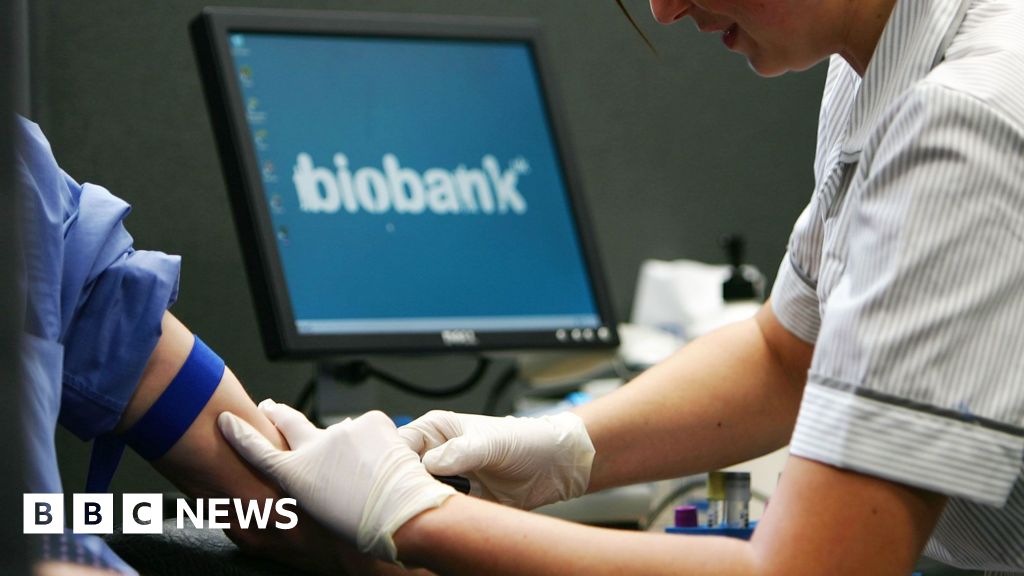
Nurse taking blood from person as biobank logo appears on screen in background.
Health data from 500,000 participants in the UK Biobank, a landmark scientific program, appeared for sale online in China. The UK government confirmed this incident, leading to immediate actions and a renewed focus on research data security.
The UK Biobank operates as a large-scale, prospective cohort study, recruiting 500,000 volunteers aged 40-69 between 2006 and 2010. For over two decades, it has collected extensive health information, including whole-body scans, DNA sequences, medical records, and lifestyle details. This comprehensive dataset supports over 18,000 scientific publications, enabling research into the detection and treatment of conditions like dementia, some cancers, and Parkinson's disease.
The UK government confirmed listings for the complete UK Biobank database on Alibaba, a Chinese e-commerce platform. Technology minister Ian Murray stated the data, though de-identified without names, addresses, or contact details, included sensitive insights. This comprised gender, age, month and year of birth, socioeconomic status, lifestyle habits, and measures from biological samples.
Professor Naomi Allen, UK Biobank's chief scientist, attributed the unauthorized listing to "rogue researchers." She called their actions "a disgrace to science," stating she and her colleagues are "extremely cross" about the incident. No purchases were made from the listings before their swift removal. UK Biobank initiated an investigation, suspended researcher access, and implemented new security measures.
This incident underscores significant vulnerabilities, even when research data is de-identified. While direct personal identification is unlikely from the listed information, the breach represents a profound violation of trust for the 500,000 participants who contributed their health details. The revelation that the data originated from a "legitimate download by a legitimately accredited organization" rather than a cyber-attack highlights challenges in controlling data use post-access.
This event prompts a re-evaluation of data governance and contractual agreements within the global scientific community. The integrity of large-scale cohort studies, which are crucial for understanding disease mechanisms, depends heavily on maintaining participant confidence and robust security. Practical takeaways for participants include understanding that while direct identifiers are removed, the aggregation of other data points, such as demographic and biological measures, still carries privacy implications. The focus now shifts to UK Biobank's ongoing forensic investigation and the implementation of even more stringent safeguards to prevent future unauthorized distribution of this invaluable scientific resource.
Continue reading
More in this thread
Vietnam Vet Found Alive After Four Days in Arizona Wilderness, Rescued by His Own Son
Dr. Priya Sharma
Guyana Leaders Declare AI Essential for Building World‑Class Health System
Dr. Priya Sharma
Mount Sinai Cites Global Smart Hospital Ranking While Urging Guyana to Embrace AI for Health Care Overhaul by 2030
Dr. Priya Sharma
Conversation
Reader notes
Loading comments...