Trump‑Xi Summit Ends Without Trade Deal, Sets Up New Board of Trade and Taiwan Warning
Trump and Xi leave Beijing without a trade pact, create a Board of Trade, and issue a stark Taiwan warning that could affect future U.S.-China relations.
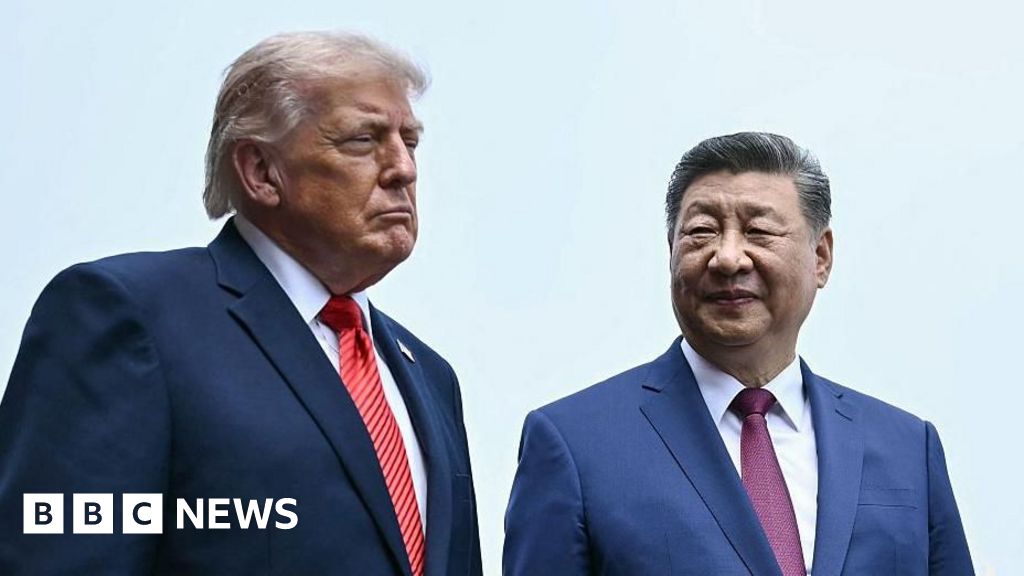
US President Donald Trump and China's President Xi Jinping walk side by side on a visit of the Temple of Heaven in Beijing on May 14 2026. Both men are wearing blue suits. Trump is wearing a red striped tie, while Xi is wearing a purple one. Both men have serious expressions
*TL;DR: The Trump‑Xi summit produced no new trade agreement, but created a Board of Trade to manage tariffs and featured Xi’s warning that a mishandled Taiwan issue could lead to conflict.*
Context President Donald Trump spent more than two hours in Beijing, branding the U.S.–China relationship as the world’s most consequential economic tie. The meeting unfolded amid elaborate ceremonies, including a high‑profile welcome for Elon Musk and Nvidia CEO Jensen Huang, symbols of the electric‑vehicle, AI and semiconductor sectors that dominate bilateral trade tensions.
Key Facts Trump declared the gathering “potentially the biggest summit ever” and the White House called it “highly productive.” No sweeping trade deal emerged; instead, both sides emphasized continuity of the October truce that paused steep tariff hikes and eased Chinese restrictions on rare‑earth exports. The White House announced that Trump and Xi agreed to establish a “Board of Trade,” a mechanism to oversee commerce without reopening formal tariff negotiations. U.S. Treasury Secretary Scott Bessent hinted at large Boeing orders and broader Chinese purchases of U.S. energy and agricultural products, though concrete figures remain pending.
Xi paired praise for progress in earlier South Korea talks with a stark warning: “If mishandled, the two nations could collide or even come into conflict,” referring to Taiwan. He framed Taiwan as the most sensitive issue in the bilateral relationship, linking it directly to future trade stability. Xi also promised wider market access for U.S. firms and called for expanded cooperation in agriculture, healthcare, tourism and law enforcement, describing the ties as “mutually beneficial.”
What It Means The new Board of Trade signals a shift toward institutional management of the U.S.–China economic relationship, aiming to preserve the fragile truce while avoiding a full tariff reset. However, the board’s effectiveness will depend on rapid operationalization and mutual willingness to adhere to its guidelines. Xi’s Taiwan warning elevates the island’s status from a peripheral friction point to a potential deal‑breaker, suggesting that future trade negotiations may be contingent on Beijing’s assessment of U.S. policy toward Taipei. American companies can expect continued market opportunities in energy and agriculture, but must navigate heightened geopolitical risk and regulatory scrutiny.
Looking ahead, observers will watch how quickly the Board of Trade becomes functional and whether Taiwan’s status will shape the next round of U.S.–China trade talks.
Continue reading
More in this thread
Bipartisan Warren-Hawley Bill Threatens CVS Pharmacy Closures in Tennessee
Nadia Okafor
Louisiana Senate Passes Map Cutting Majority‑Black District, GOP Set for 5‑1 Edge
Nadia Okafor
Iran Launches Cyberspace Headquarters as 90 Million Stay Offline Amid War Blackout
Nadia Okafor
Conversation
Reader notes
Loading comments...