Tokyo Electron Korea Signs South Korea’s Largest Renewable PPA for a Foreign Chip Equipment Maker
Tokyo Electron Korea and KT Corp agree to a 50‑MW renewable direct PPA, the biggest for a foreign semiconductor equipment maker in South Korea.
TL;DR
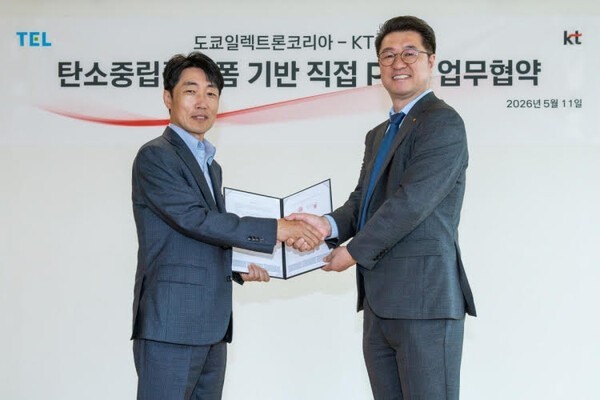
Tokyo Electron Korea and KT Corp agreed to a 50‑megawatt renewable direct power purchase agreement, the largest such deal for a foreign semiconductor equipment maker in South Korea. The deal, signed May 11, will supply the company’s Hwaseong office and semiconductor process R&D centers with clean electricity, targeting 100% renewable use.
Context
A direct power purchase agreement (direct PPA) lets a power producer sell electricity straight to a corporate buyer without using the wholesale market. Tokyo Electron Korea, the Korean arm of Japan’s Tokyo Electron, and KT Corp, South Korea’s telecom giant, signed a memorandum of understanding for the 50‑MW renewable direct PPA. Under the planned contract, KT will start delivering 15 MW in September, scaling up to the full 50 MW as additional renewable capacity comes online. The electricity will cover the annual demand of Tokyo Electron Korea’s Hwaseong site and its research facilities.
Key Facts
- The agreement is believed to be the largest direct PPA ever signed in South Korea by a foreign semiconductor equipment maker. - Lee Sun‑gil, chief technology officer at Tokyo Electron Korea, called the deal "a highly important step" in the company’s sustainability roadmap. - KT said the project creates a foundation for expanding its private‑sector direct PPA business through an intelligent renewable energy supply network.
What It Means
The PPA gives Tokyo Electron Korea a stable, eco‑friendly power source to meet customers’ greenhouse‑gas reduction requests and supports its RE100 ambitions. For KT, the deal validates its role as a carbon‑neutral platform that can help Korean manufacturers achieve renewable goals. The move may encourage other foreign chip equipment firms in Korea to pursue similar direct PPAs, boosting corporate demand for renewable energy.
Watch for the final contract signing later this year and the September start of the first 15 MW delivery, which will signal whether the planned 50 MW scale‑up proceeds on schedule.
Continue reading
More in this thread
Conversation
Reader notes
Loading comments...