Three African Nations Block Taiwan President's Flight to Eswatini, Underscoring China's Diplomatic Reach
Madagascar, Seychelles, and Mauritius denied Taiwan President Lai Ching-te overflight, highlighting China's influence on international diplomatic relations.
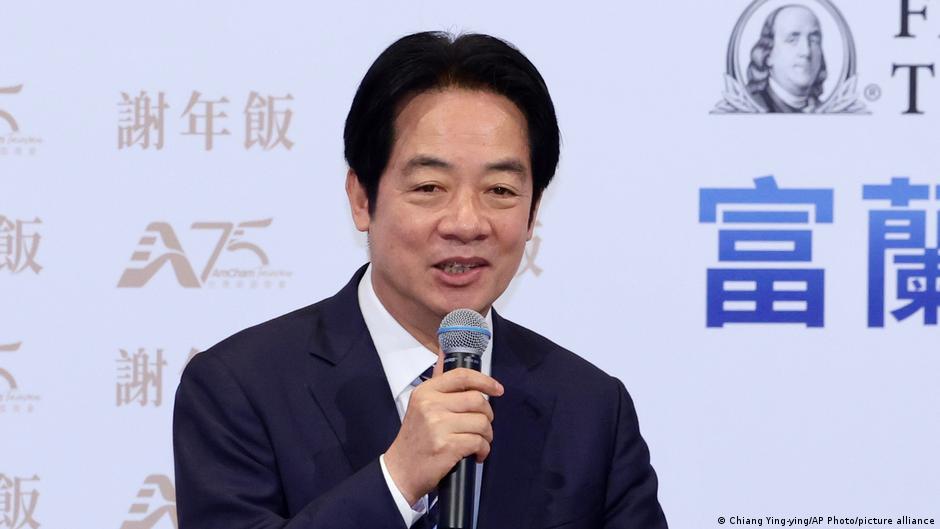
Taiwan President Lai Ching-te
TL;DR
Three African nations denied Taiwan's President Lai Ching-te overflight access for a state visit, a clear diplomatic move that underscores the global reach of China's "One China" policy. This incident highlights the challenges Taiwan faces in international relations.
Taiwan, officially the Republic of China, navigates a complex international landscape where its sovereignty is not widely recognized. The "One China" policy, supported by many countries, acknowledges Beijing's claim over Taiwan as an inseparable part of China. This framework often restricts Taiwan's official diplomatic engagements and access to international platforms.
On April 22, 2026, Taiwan's President Lai Ching-te traveled to Eswatini, formerly Swaziland, for a state visit. His itinerary included attending King Mswati III's 58th birthday and 40th coronation. Eswatini holds a unique position as the only African nation that maintains formal diplomatic relations with Taiwan.
During President Lai's journey, three African nations—Madagascar, Seychelles, and Mauritius—denied permission for his flight to enter their national airspace. Granting overflight permission allows an aircraft to pass through a country's controlled skies, a routine diplomatic courtesy for state visits. This denial necessitated an altered flight path for the Taiwanese delegation.
The refusal to grant overflight rights demonstrates the practical implications of adhering to the "One China" principle. Nations recognizing Beijing often extend this policy to restrict interactions that could imply Taiwan's independent statehood. This diplomatic pressure impacts Taiwan's ability to conduct official business and travel freely across international boundaries.
This incident offers a tangible example of China's extensive diplomatic influence on the African continent and globally. It showcases how countries align their policies to reflect their recognition of Beijing, even when it affects travel for leaders of entities like Taiwan. The event underscores the continuous effort required for Taiwan to maintain its remaining diplomatic ties.
Future diplomatic travel by Taiwanese officials will face continued scrutiny and potential logistical challenges. The international community will observe how nations navigate such requests, reflecting the evolving dynamics of recognition for Taiwan on the global stage.
Continue reading
More in this thread
ICE Apprehends Nigerian National Olatunde Olusanjo in Los Angeles, Citing Child Molestation Record
Nadia Okafor
ICE Los Angeles Arrests Nigerian National Olatunde Olusanjo for Prior Child Molestation and Sex Offenses
Nadia Okafor
Iran Hangs Man Alleged Mossad Operative Amid Surge in Protest-Linked Executions
Nadia Okafor
Conversation
Reader notes
Loading comments...