Thailand’s Nagatitan chaiyaphumensis Named Largest Southeast Asian Dinosaur at 27 Tonnes
Thailand’s Nagatitan chaiyaphumensis, a 27‑tonne sauropod from the Cretaceous, is confirmed as Southeast Asia’s largest dinosaur. Learn how researchers estimated its size and what the find means for paleogeography.
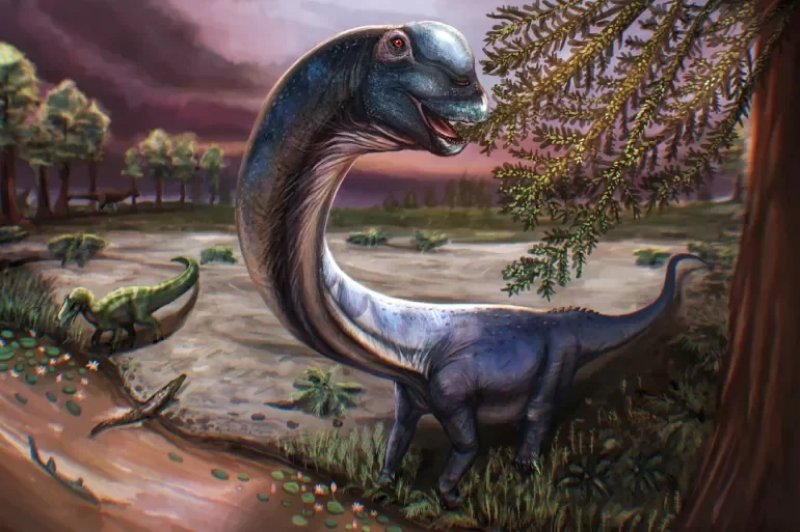
TL;DR: Scientists have identified Nagatitan chaiyaphumensis as the largest dinosaur ever discovered in Southeast Asia, weighing roughly 27 tonnes and measuring 27 metres long.
Context
The fossils were first spotted by local residents about ten years ago and fully excavated in 2024 in northeastern Thailand. Researchers from the Sirindhorn Museum and Thai universities scanned the femur and vertebrae with laser scanners, compared the measurements to known sauropods, and used mass‑estimation equations to estimate weight.
The sedimentary layers date the animal to the mid‑Cretaceous, between 100 and 120 million years ago, when the region was a floodplain before becoming a shallow sea. The lack of a skull and teeth meant scientists relied on comparative anatomy with related titanosaurs to infer its feeding habits.
Key Facts
- Estimated weight: about 27 tonnes, roughly equivalent to nine adult elephants. - Body length: approximately 27 metres. - Age: lived between 100 and 120 million years ago. - Diet: classified as a “bulk browser” that consumed large volumes of low‑nutrient vegetation such as conifers and seed ferns with little chewing. - Comparison: weighs about 125 % more than the well‑known Diplodocus (~12 tonnes). - Fossil completeness: skull and teeth are missing; size estimates derive from limb bone scaling.
What It Means
The find pushes the upper limit of dinosaur size recorded in Southeast Asia and shows that massive sauropods persisted in the region shortly before marine transgression altered the landscape.
This helps refine models of Cretaceous paleogeography and sea‑level change in continental interiors.
The genus name Nagatitan references the Naga serpent figure in Asian traditions, reflecting the dinosaur’s cultural resonance in Thailand.
Future work will focus on locating cranial material at the quarry and conducting isotopic analyses of bone collagen to clarify the dinosaur’s precise diet, growth rate, and metabolic strategy.
Continue reading
More in this thread
Conversation
Reader notes
Loading comments...