Taiwan’s Renewable Energy Goal at Risk Amid Gas Expansion
Taiwan's Economy Minister indicates the island may miss its 30% renewable electricity target by 2030, citing rising demand and new natural gas plants.
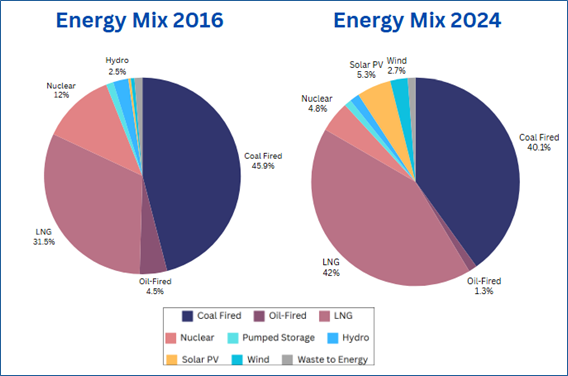
**TL;DR** Taiwan’s 2030 goal for 30% renewable energy faces challenges, with a top official admitting the target may not be met. Current renewable electricity generation stands at 15%, significantly below interim goals.
Taiwan's ambition to source 30% of its electricity from renewable power by 2030 now appears difficult to achieve. Economy Minister Kung Ming-hsin indicated the island's green energy share may not be attainable due to rising electricity demand and the addition of new natural gas plants.
As of February, renewable sources contributed only 15% of Taiwan’s electricity. This figure remains significantly below the 20% interim goal set for late 2026 and the 30% objective for 2030. The discrepancy highlights the challenges in accelerating green energy adoption while overall power consumption increases.
Taiwan, a major semiconductor manufacturing hub, experiences mounting pressure to boost its clean energy supply. Global technology firms demand more renewable electricity to meet their climate commitments, participating in initiatives like RE100. This program sees companies commit to sourcing 100% of their electricity from renewable energy.
Further adjustments reflect these challenges. Taiwan reduced its 2030 geothermal power target from 1.2 gigawatts (GW)—a measure of power generating capacity—to 200 megawatts (MW). This represents an over 80% cut in planned capacity. Regulatory changes, including amendments to environmental impact assessment rules, also slowed solar project deployment.
The government describes its updated approach as "pragmatic." This strategy prioritizes expanding installed green power capacity to satisfy the demand from multinational companies committed to renewable electricity use. This occurs rather than focusing solely on the overall share of renewables in the national energy mix. Despite these shifts, officials from the National Development Council reportedly still cite the earlier, higher 1.2 GW geothermal target, highlighting internal inconsistencies.
Taiwan continues its broader energy strategy by promoting offshore wind and solar power alongside expanding its liquefied natural gas capacity. This aims to ensure energy supply stability.
Future developments will clarify whether Taiwan revises its official energy benchmarks or intensifies efforts on specific renewable projects to bridge the current gap between ambition and reality.
Conversation
Reader notes
Loading comments...