SNP Secures 58 Seats as Turnout Drops to 53% in Holyrood Vote
The SNP secures 58 seats but falls short of a majority as voter turnout drops to 53% in Scotland's 2026 Holyrood election.
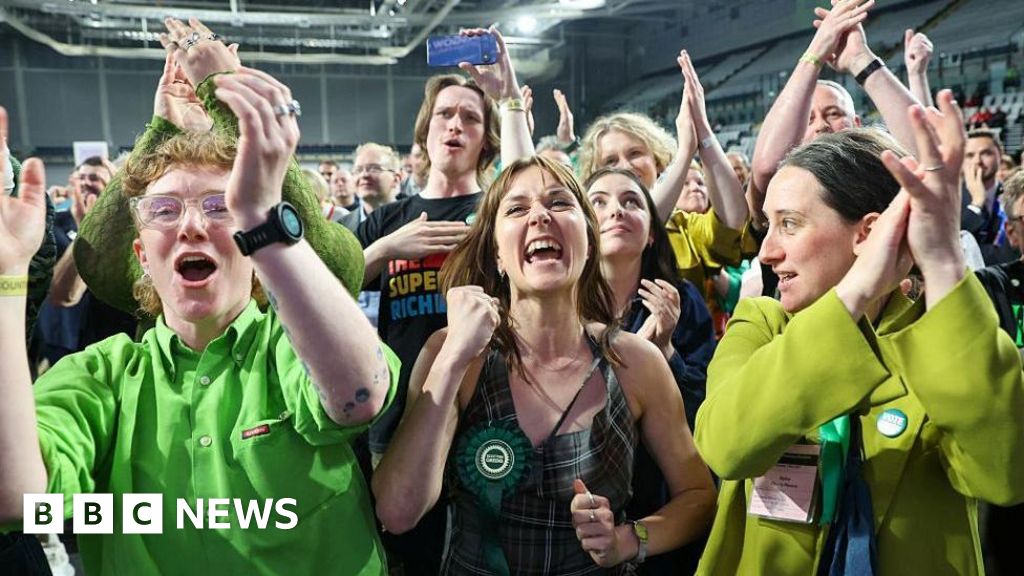
A group of young people dressed in green are all smiling and waving there arms in the air as they celebrate
*TL;DR The Scottish National Party wins 58 seats but lacks a majority; voter turnout falls to 53%, ten points lower than 2021.*
Context Scotland held its fifth Holyrood election on 6 May 2026. All 129 seats were contested across 73 constituencies and eight regional lists. The election determines the composition of the devolved Scottish Parliament, which controls health, education and transport policy.
Key Facts - The SNP captured 58 seats, the highest single‑party tally but 11 seats shy of the 69 needed for a governing majority. - Party leader John Swinney declared the result a “hands‑down” victory and signalled his intent to form a government. - Turnout fell to 53%, a ten‑point drop from the 63% record set in 2021. Only one constituency, Glasgow Kelvin and Maryhill, saw a marginal rise of 0.4%. - Labour and Reform UK tied for second place with 22 seats each, while the Conservatives slumped to 12 seats, their worst ever Holyrood showing. - The Greens reached a historic high of 15 seats, including their first constituency wins in Glasgow Southside and Edinburgh Central. - The Liberal Democrats increased to 10 seats, adding two large northern constituencies and urban seats in Edinburgh.
What It Means The SNP’s 58 seats place it firmly ahead of rivals but force it to seek support from smaller parties to pass legislation. The Greens, now present in every region, could become king‑makers on climate and social policy. The Liberal Democrats, with a stronger foothold in the north, may leverage budget negotiations. Meanwhile, the Conservatives’ collapse to 12 seats limits their ability to challenge the government, while Labour’s tie with Reform UK suggests a fragmented opposition.
Low turnout raises questions about public engagement. With fewer than half the electorate voting in 18 seats, parties face pressure to address voter apathy, often dubbed the “scunner factor.” Strategies to boost participation will likely dominate campaign narratives ahead of the next Holyrood session.
Looking ahead, watch how the SNP negotiates confidence‑and‑supply agreements with the Greens and Lib Dems, and whether any party can reverse the downward trend in voter turnout before the 2031 election.
Continue reading
More in this thread
Conversation
Reader notes
Loading comments...