Skyroot Hits $1.1 B Valuation as India’s Space Tech Funding Surges Past $196 M in 2025
Skyroot’s $60M round values it at $1.1B, making India’s first spacetech unicorn as 2025 private funding tops $196M.
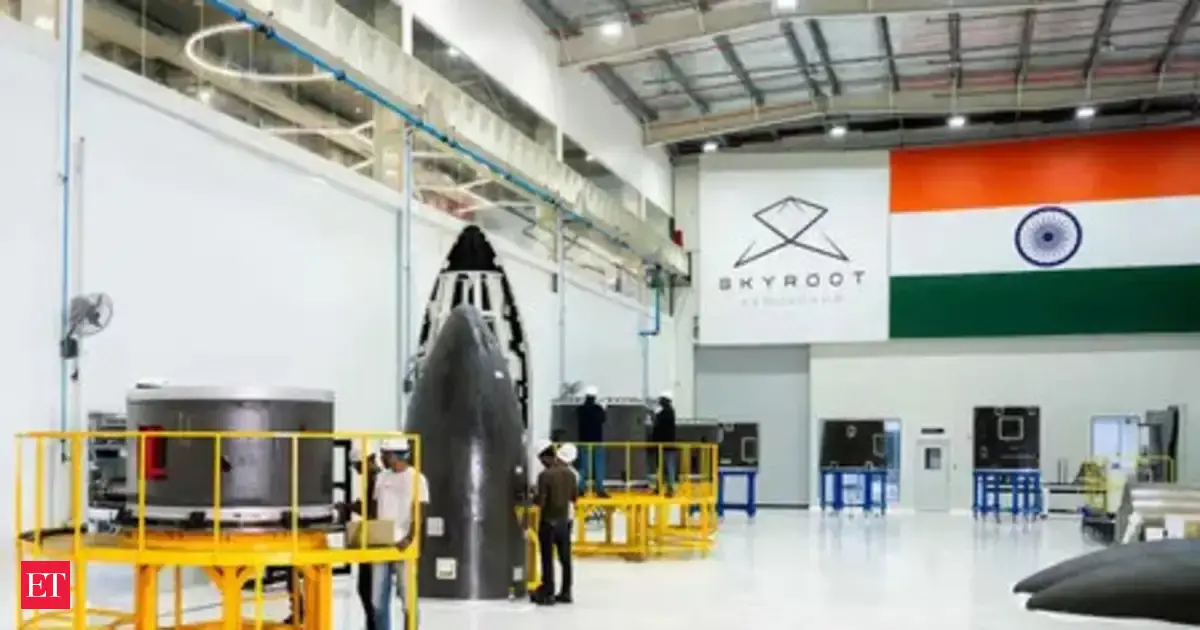
TL;DR: Skyroot Aerospace reached a $1.1 billion valuation after a $60 million round led by GIC, Sherpalo Ventures and BlackRock, becoming India’s first spacetech unicorn as 2025 private funding for the sector topped $196 million.
Context India opened its space sector to private players in 2020 with the creation of IN‑SPACe, which grants startups access to ISRO facilities and launch infrastructure. Since then, companies such as Skyroot and Agnikul have pursued orbital launch capabilities, a capability that remains the gateway to commercial space transportation. The global small‑launch market is projected to exceed $20 billion by 2030, driven by demand for satellite constellations, earth observation and defence payloads.
Key Facts Skyroot’s $60 million Series C round was led by Singapore’s sovereign wealth fund GIC and Silicon Valley‑based Sherpalo Ventures, with BlackRock also participating. The round values the Hyderabad‑based startup at $1.1 billion, conferring unicorn status. Agnikul, an IIT‑Madras‑incubated firm, is negotiating a $50‑75 million raise at roughly a $500 million valuation, according to market reports. In 2025, private investment in India’s spacetech sector exceeded $196 million across 55 deals, more than double the 2024 total. For comparison, Rocket Lab (RKLB) held a market capitalization of about $2.5 billion, while Astra (ASTR) traded near $300 million, illustrating the scale gap between established public launchers and India’s emerging private ventures.
What It Means The funding inflows signal that global investors view India’s engineering talent and lower operating costs as a viable foundation for low‑cost launch services. Valuations are being set largely on technical milestones—such as Skyroot’s upcoming Vikram‑1 orbital test—and on the addressable market for small‑satellite launches, rather than current revenue. This mirrors the early‑stage financing patterns seen with SpaceX before its first commercial flights. The mechanism at work is a bet on future cash flows from launch contracts, satellite‑as‑a‑service offerings and potential defence partnerships.
What to watch next Investors will monitor Skyroot’s Vikram‑1 orbital launch attempt later this year and Agnikul’s fund‑raise closure, both of which could validate valuations and shape the next wave of Indian spacetech financing.
Continue reading
More in this thread
Honeywell Advances Quantinuum IPO Filing While Beating Q1 Revenue and EPS Estimates
David Amara
James Murren Awarded Over 6 Million Shares and 167k Options in Enhanced Group Deal
David Amara
Young America Capital Advises Trasteel on $1.3 B Nasdaq SPAC Deal with Sizzle II
David Amara
Conversation
Reader notes
Loading comments...