Senate OKs $516.3 M Loan for Sokoto‑Badagry Highway
Nigeria’s Senate approved a $516.3 million syndicated loan for the first 120 km of the Sokoto‑Badagry Super Highway, part of a 1,000‑km corridor linking seven states.
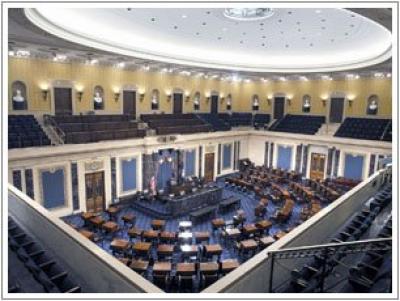
Senate chamber with a circular light in the ceiling shining above rows of chairs all facing a speakers podium in a half-circle shape
TL;DR
The Nigerian Senate approved a $516.3 million syndicated loan to finance the initial 120‑km stretch of the Sokoto‑Badagry Super Highway, a segment of a planned 1,000‑km corridor connecting seven states. The facility, arranged by Deutsche Bank with a partial guarantee from ICIEC, has a nine‑year tenor, up to three years grace, and interest set at CME SOFR plus 5.35%.
Context The loan is intended to kick‑start a major infrastructure project designed to improve trade, lower logistics costs, and link agricultural zones with markets across Sokoto, Kebbi, Niger, Kwara, Oyo, Ogun, and Lagos States. Nigeria’s external debt stock stood at roughly $42 billion at the end of 2023, making this borrowing about 1.2 % of the total. Deutsche Bank AG (ticker: DB) has a market capitalization of approximately $33 billion; its shares were little changed in early European trading after the announcement.
Key Facts The Senate voted to approve the $516,333,700 facility on Wednesday, following a report from the Committee on Local and Foreign Debts. Repayment is scheduled over nine years, with a grace period of up to three years, and the interest rate floats at CME SOFR plus 5.35% per annum. The funds will finance Section One, Phase One (A and B1) of the highway, covering about 120 km of the eventual 1,000‑km route. The loan includes a partial risk guarantee from the Islamic Corporation for the Insurance of Investment and Export Credit (ICIEC), an arm of the Islamic Development Bank.
What It Means By layering a syndicated loan with a credit‑enhancement guarantee, the structure aims to lower borrowing costs while providing lenders with added security. The grace period gives the government time to complete land acquisition and compensation before repayments begin. Analysts will monitor whether the project stays on schedule and whether the anticipated economic returns materialize to offset the added debt.
What to watch next Disbursement of the loan funds, commencement of construction on the 120‑km segment, and quarterly reporting from the Federal Ministry of Finance, Debt Management Office, and Ministry of Works will be key indicators of progress and fiscal impact.
Continue reading
More in this thread
Conversation
Reader notes
Loading comments...