Scotland Secures First World Cup Spot Since 1998
Scotland ends a 24‑year World Cup drought, qualifying for the 2026 tournament under Steve Clarke. Key facts, players and what lies ahead.
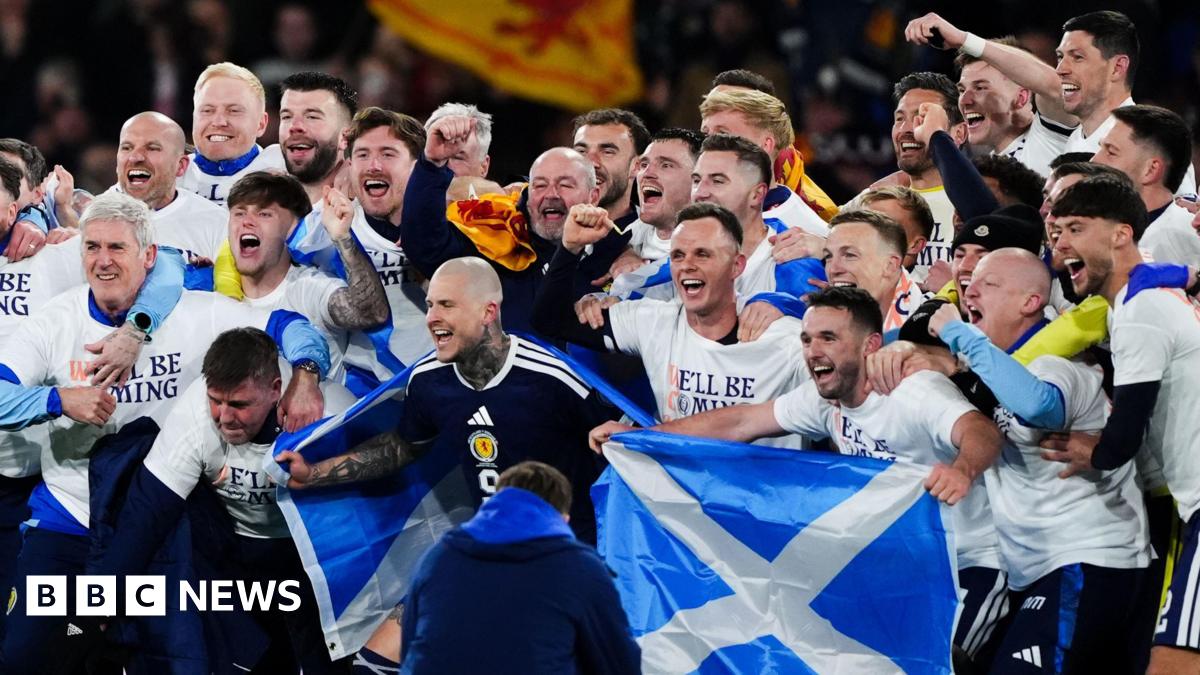
The Scotland's men's football team gather together for a group photo after winning their match against Denmark. They are wearing tops which say "We'll be coming" and holding blue and white Scotland flags. Behind them, fans can be seen in the stands waving a yellow and red Lion Rampant flag.
TL;DR: Scotland qualified for the 2026 World Cup, its first appearance since 1998, marking a 24‑year gap and the ninth tournament in the nation’s history.
Scotland clinched the final North American spot after a disciplined UEFA qualifying campaign. The team topped a competitive group, delivering key home victories and maintaining consistency against stronger opponents. The result ends a 24‑year absence that spanned six World Cup editions.
Steve Clarke, appointed in 2019, has now guided Scotland to three consecutive major tournaments: Euro 2020, Euro 2024, and the 2026 World Cup. His pragmatic, defense‑first approach—often using a 3‑4‑2‑1 or 5‑4‑1 formation—has emphasized compactness, set‑piece efficiency and rapid transitions. The coach’s contract runs through the tournament, making the qualification a pivotal milestone in his tenure.
Scotland’s World Cup record lists nine appearances: 1954, 1958, 1974, 1978, 1982, 1986, 1990, 1998 and now 2026. The team has never progressed beyond the group stage, a benchmark it hopes to improve in North America. Group C pits Scotland against Brazil, Morocco and Haiti, with opening matches against Haiti in Philadelphia on 14 June and Morocco in Boston on 20 June. A final group game against Brazil in New Jersey follows on 25 June.
Key players include captain Andy Robertson, whose stamina and crossing drive the left flank, and Kieran Tierney, a versatile defender who scored the decisive goal against Denmark in the qualifying run. Midfield anchor Scott McTominay provides box‑to‑box energy, while Billy Gilmour offers technical control. Striker Lyndon Dykes adds aerial threat on set pieces, and John McGinn contributes creativity and goal‑scoring from midfield.
The qualification reflects a shift from previous generations that struggled to convert talent into results. Clarke’s side displayed maturity under pressure, managing games with disciplined defending and effective counter‑attacks. The achievement also revitalizes national interest, with celebrations spreading across Scotland as a new generation anticipates the tournament.
What it means: Scotland returns to the world stage with a clear tactical identity and a core of experienced internationals. The next test will be translating qualifying consistency into World Cup points against a heavyweight like Brazil. Progress beyond the group stage would mark the first such breakthrough in the nation’s nine‑appearance history. All eyes will be on the opening fixtures to gauge whether the Tartan Army can rewrite its World Cup narrative.
Continue reading
More in this thread
Norris Claims First Non-Mercedes Pole in 2026 Miami Sprint as Penalties Reshape Grid
Marcus Cole
Cade Cunningham Leads DFS Guard Picks While Ja'Kobe Walter and Scottie Barnes Offer Value
Marcus Cole
John Wall Takes Helm of Basketball Operations at Howard University
Marcus Cole
Conversation
Reader notes
Loading comments...