Scientist Turned Silk Farmer Highlights India's Tech-Driven Sericulture Boom
Discover how a scientist turned silk farmer is achieving high yields and income, highlighting India's tech-driven rise in global sericulture.
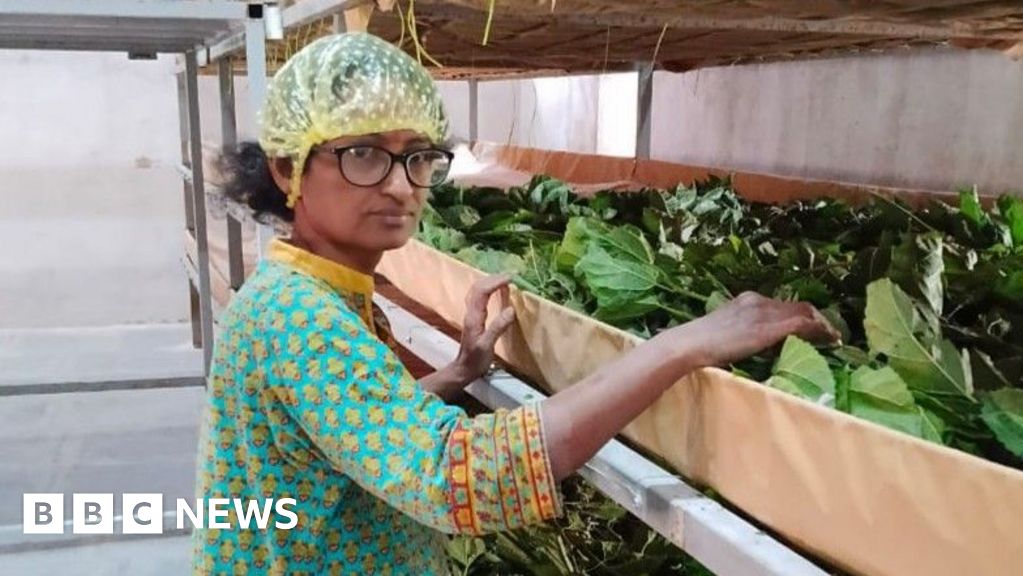
Umamaheswari standing in her silk farm
TL;DR
India’s sericulture, or silk farming, sector is rapidly modernizing, leveraging technology and scientific methods to increase yields and income for producers like Dr. Jolapuram Umamaheswari, who generates approximately $1,000 monthly from her operation. The country stands as the world's second-largest silk producer, fueled by these innovations.
Dr. Jolapuram Umamaheswari, a former scientist, shifted her focus to sericulture, the process of cultivating silkworms to produce raw silk. She applies scientific rigor to her farm, growing mulberry leaves to feed silkworms before harvesting their cocoons and extracting silk fibers. Her journey highlights the industry's move towards precision and efficiency.
Today, Dr. Umamaheswari successfully produces 10 crops of raw silk annually. Each silkworm batch completes its growth cycle within 25 to 30 days. This consistent production yields her approximately $1,000 (£760) each month from her silk farming operations.
Her success mirrors a broader trend within India's silk industry. India holds the position as the second-largest global producer of silk, trailing only China. This national standing is increasingly supported by advanced technologies and farming techniques.
Modern sericulture integrates sensors and automated systems to precisely control temperature and humidity, crucial factors for silkworm health. AI and computer vision also detect diseases early, enhancing yield stability. Further innovations include genome editing for developing disease-resistant silkworm varieties and finding uses for by-products, such as turning silkworm pupae into nutrient-rich animal feed.
Despite concerns about the number of active farmers, technological advancements in rearing techniques and disease control are boosting per-acre yields significantly. This shift ensures the industry can meet demand even as it evolves.
Observers will monitor continued technological integration in sericulture, watching its impact on overall production efficiency and farmer livelihoods.
Continue reading
More in this thread
Carlisle Q1 Earnings Beat Estimates by 9.8% While Revenue Slightly Misses Forecast
Elena Voss
Egypt’s 100‑Million Population Drives Post‑2010 Economic Recovery as Rome, Georgia Embraces Sustainable Engineering
Elena Voss
USA Rare Earth Announces Board Departures and Merger Plans Ahead of June Annual Meeting
Elena Voss
Conversation
Reader notes
Loading comments...