Sanctions Compliance Failures to Be Scrutinized at 12th International Compliance Forum
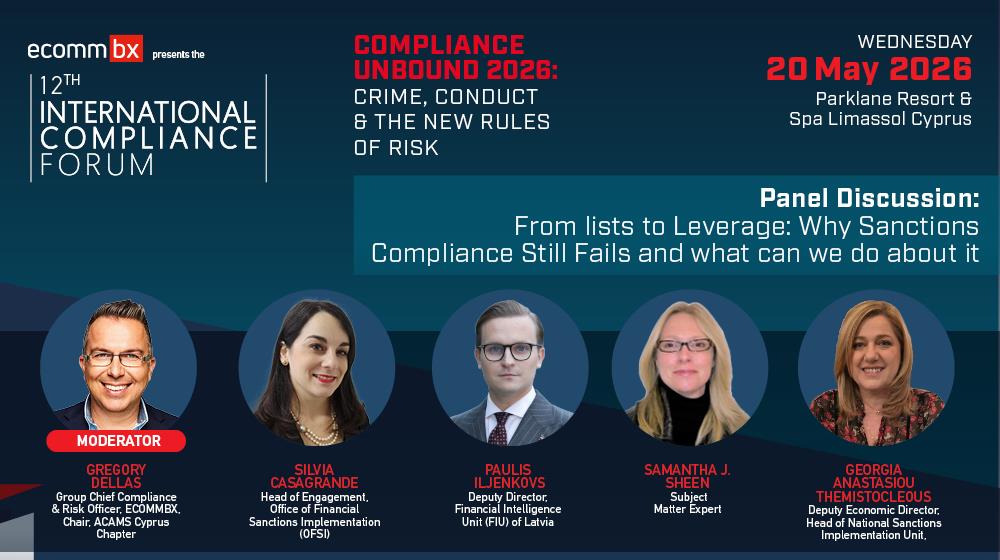
Experts will dissect why sanctions controls still miss the mark at the 12th International Compliance Forum in Limassol on May 20.
TL;DR
– A panel of regulators and industry specialists will analyze persistent sanctions compliance gaps at the 12th International Compliance Forum in Limassol on May 20.
Context Sanctions regimes have become a litmus test for corporate risk management. Despite billions spent on screening software, many firms still treat sanctions lists as a checkbox rather than a strategic safeguard. The gap between regulatory expectations and operational reality has led to costly enforcement actions, prompting a need for deeper dialogue.
Key Facts - The forum convenes on May 20 at the Parklane Resort & Spa, Limassol, under the banner of ECOMBBX. - The centerpiece panel, titled *From Lists to Leverage: Why Sanctions Compliance Still Fails and What Can We Do About It*, brings together Paulis Iljenkovs, deputy director of Latvia’s Financial Intelligence Unit; Samantha J. Sheen, a sanctions subject‑matter expert; Georgia Themistocleous, head of Cyprus’s Sanctions Unit; and Silvia Casagrande, OFSI’s head of engagement. - Freedom Holding Corp. (ticker FRHC) is a platinum sponsor; its market cap sits at roughly $1.2 billion, and the stock rose 3.4 % after the sponsor announcement, outpacing the S&P 500’s 1.9 % gain. - Compliance‑focused fintechs such as Treppides (private) and XM (ticker XM) are gold sponsors, reflecting growing investor interest in risk‑technology solutions. - The agenda also covers DORA (Digital Operational Resilience Act), third‑party risk, and data‑governance, linking sanctions oversight to broader regulatory trends.
What It Means The panel’s focus on “leverage” signals a shift from pure list‑matching to risk‑based decision making. Iljenkovs is expected to detail how Latvian authorities assess beneficial‑ownership data, while Themistocleous will outline Cyprus’s cross‑border coordination with EU sanctions bodies. Casagrande’s OFSI perspective will likely highlight enforcement patterns, such as the recent $4.2 billion fine against a major UK bank for inadequate escalation procedures. For banks, the discussion underscores the cost of fragmented controls: the average sanctions breach now costs firms $12 million in fines and remediation, according to recent enforcement statistics. Fintechs that can embed real‑time ownership analytics may capture market share, as evidenced by XM’s 7 % surge in daily active users after launching a new compliance dashboard. Investors should watch how the forum’s outcomes influence corporate governance scores, which feed into ESG (environmental, social, governance) ratings. A rise in ESG scores often translates into lower cost of capital; companies that tighten sanctions controls could see credit spreads tighten by 15‑20 bps.
Looking Ahead The next week’s regulatory filings will reveal whether participants translate forum insights into concrete policy updates, a development that could reshape compliance spending across the financial sector.
Continue reading
More in this thread
Conversation
Reader notes
Loading comments...