Proxima Fusion’s €400m ‘dumb machine’ stellarator aims to outpace tokamaks with German manufacturing edge
Proxima Fusion secured €400m for its 'dumb machine' stellarator, aiming to leverage Germany's 550,000 CNC machinists to outpace tokamaks in fusion energy.
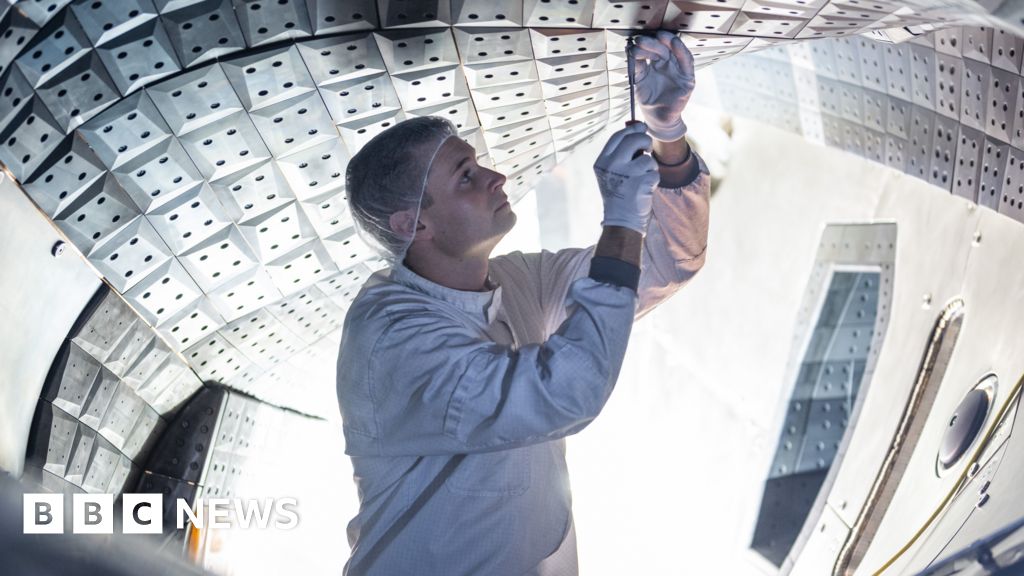
An engineer works inside the W7-X
TL;DR
Proxima Fusion, a German startup, secured €400 million to advance its 'dumb machine' stellarator, aiming to accelerate the delivery of fusion energy. The company leverages Germany's robust manufacturing capabilities to construct these complex fusion devices, seeking to outpace traditional tokamak designs.
Nuclear fusion offers the promise of abundant, emission-free electricity by replicating the Sun's energy process on Earth. This involves heating hydrogen isotopes to extreme temperatures, creating a plasma that must be precisely contained. The two primary approaches are tokamaks and stellarators. While tokamaks utilize simpler magnetic geometries, stellarators feature intricate, twisted shapes designed for greater plasma stability, though their complex construction poses engineering challenges.
Proxima Fusion is betting on the stellarator design, recently securing €400 million from Bavaria to develop its advanced device, Alpha. Francesco Sciortino, co-founder and CEO, refers to the stellarator as a "dumb machine," implying that once built, it operates with the simplicity of a microwave oven. This operational ease contrasts with the significant manufacturing effort required. Building these precisely shaped magnets demands specialized skills, a challenge mitigated by Germany's industrial strength. The country boasts an estimated 550,000 CNC machinists, significantly more than the 350,000 in the entire United States. This robust manufacturing base provides a critical advantage for fabricating the complex components needed. Proxima Fusion now seeks over $1 billion in additional federal funding, with a decision anticipated next year.
This substantial investment highlights a strategic push towards stellarator technology, emphasizing operational simplicity despite manufacturing difficulties. The project relies on the stellarator's potential for stable plasma confinement and Germany's deep expertise in precision engineering to overcome construction hurdles. Success could accelerate the development of a viable fusion energy timeline. The impending decision on federal funding next year will provide further insight into the long-term commitment to this complex, high-potential approach for clean power.
Continue reading
More in this thread
Conversation
Reader notes
Loading comments...