Police Hack VPN Used by Ransomware Gangs, Exposing Thousands of Users
Europol-led operation dismantled the First VPN service, revealing thousands of users tied to ransomware, fraud and other crimes.
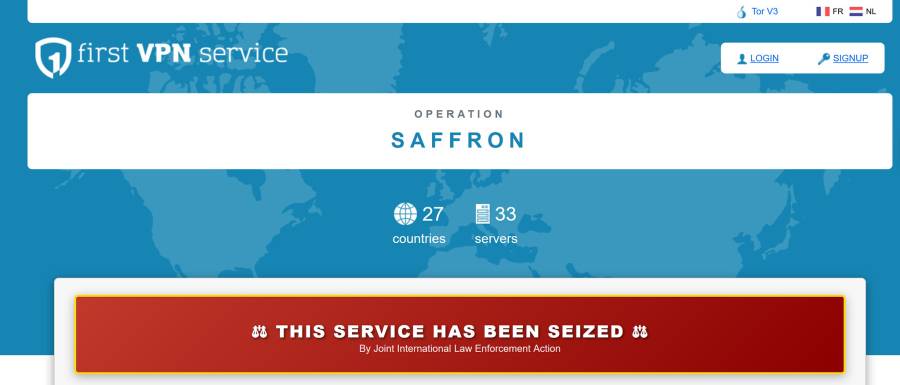
TL;DR: International law enforcement seized the First VPN service after infiltrating its servers, revealing thousands of users involved in ransomware and fraud.
Context
In December 2021, French and Dutch authorities began probing a virtual private network marketed as “First VPN” on Russian‑speaking cybercrime forums. The service promised no‑logs, IP masking, and encrypted traffic to help users hide illicit activity. Europol coordinated the operation with Eurojust and received technical assistance from Bitdefender.
Key Facts
Investigators gained unauthorized access to the VPN’s backend, copied its user database, and identified connections linked to ransomware gangs, fraud schemes, and other crimes. Europol stated the operation exposed thousands of users worldwide and generated leads for ongoing investigations. The Dutch National Police noted that users mistakenly believed they were safe while police could view their traffic. The First VPN domain now displays a seizure notice, and its administrator has been arrested.
What It Means
The takedown shows that even services advertising strong privacy can be compromised when law enforcement exploits infrastructure weaknesses. It also highlights the risk criminals face when relying on third‑party anonymity tools that may be infiltrated. Security teams should treat any VPN claim of zero logs with skepticism and verify provider integrity.
Mitigations
- Verify VPN providers through independent audits and avoid services advertised primarily on criminal forums. - Enforce multi‑factor authentication and strict access controls for remote‑access VPNs used by employees. - Monitor network logs for unexpected connections to known malicious IP ranges and flag traffic from anonymity services. - Apply the latest patches to VPN concentrators and keep firmware up‑to‑date; although no specific CVE was disclosed, regular updates mitigate known flaws. - Adopt zero‑trust network principles, limiting lateral movement even if a VPN is compromised. - Use threat‑intelligence feeds to block domains associated with seized services like firstvpn[.]net.
Investigators will continue to analyze the seized data for further leads, and law enforcement expects additional arrests.
Continue reading
More in this thread
Trump Mobile Confirms Customer Data Exposed via Third‑Party Provider
Peter Olaleru
Radiology Associates of Richmond Breach Exposes 266,183 Patients, Triggers Class Action Inquiry
Peter Olaleru
Charter Confirms Cyber Incident as ShinyHunters Threatens Leak of 42 Million Customer Records
Peter Olaleru
Conversation
Reader notes
Loading comments...