Police Hack VPN Used by Ransomware Gangs, Exposing Thousands of Criminal Users
Law enforcement seized First VPN, exposing thousands of cybercriminal users and leading to arrests. See what defenders should do next.
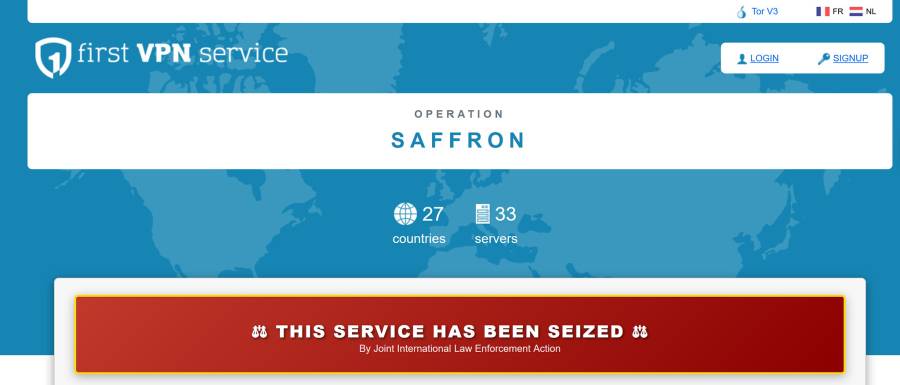
TL;DR: Law enforcement seized a VPN service favored by ransomware gangs, exposing thousands of its users and leading to arrests. The operation, led by France and the Netherlands with Europol support, began in December 2021 and culminated in the takedown of First VPN.
Context First VPN marketed itself as a “no‑logs” virtual private network that promised anonymous payments and hidden infrastructure. It was advertised on Russian‑speaking cybercrime forums as a tool to conceal ransomware attacks, data theft, and other offenses. The service claimed to encrypt traffic and hide users’ IP addresses from both the provider and outside observers.
Key Facts Investigators infiltrated the VPN in late 2021, obtained its user database, and mapped connections used by criminals. Europol said the intelligence exposed thousands of users tied to the cybercrime ecosystem and generated leads on ransomware, fraud, and other offenses worldwide. Dutch police noted that users mistakenly believed they were safe while their traffic was being monitored. The domain was seized, and the site now displays a law‑enforcement seizure notice.
What It Means The takedown shows that even services promising anonymity can be compromised when law enforcement gains backend access. It also highlights the risk criminals place in trusting “no‑logs” claims without independent verification. The operation produced actionable intelligence that may spur further arrests and disrupt ongoing ransomware campaigns.
What Defenders Should Do - Review logs for connections to known First VPN IP addresses or domains and block them. - Enforce multi‑factor authentication and zero‑trust network access to reduce reliance on anonymizing services for legitimate remote work. - Deploy detection rules for MITRE ATT&CK technique T1090 (Proxy) and T1071 (Application Layer Protocol) when traffic patterns match VPN‑like encapsulation. - Keep endpoint and network signatures updated with advisories from Europol and vendors such as Bitdefender that assisted the operation.
Watch for follow‑up arrests, the emergence of alternative criminal‑focused VPNs, and any public advisories detailing newly identified IOCs from the seized infrastructure.
Continue reading
More in this thread
Trump Mobile Confirms Customer Data Exposed via Third‑Party Provider
Peter Olaleru
Radiology Associates of Richmond Breach Exposes 266,183 Patients, Triggers Class Action Inquiry
Peter Olaleru
Charter Confirms Cyber Incident as ShinyHunters Threatens Leak of 42 Million Customer Records
Peter Olaleru
Conversation
Reader notes
Loading comments...