Peter Magyar Sworn In, Ending Orban’s 16‑Year Rule in Hungary
Peter Magyar becomes Hungary’s prime minister after his Tisza party wins a parliamentary majority, and the EU flag returns to the parliament after 12 years.
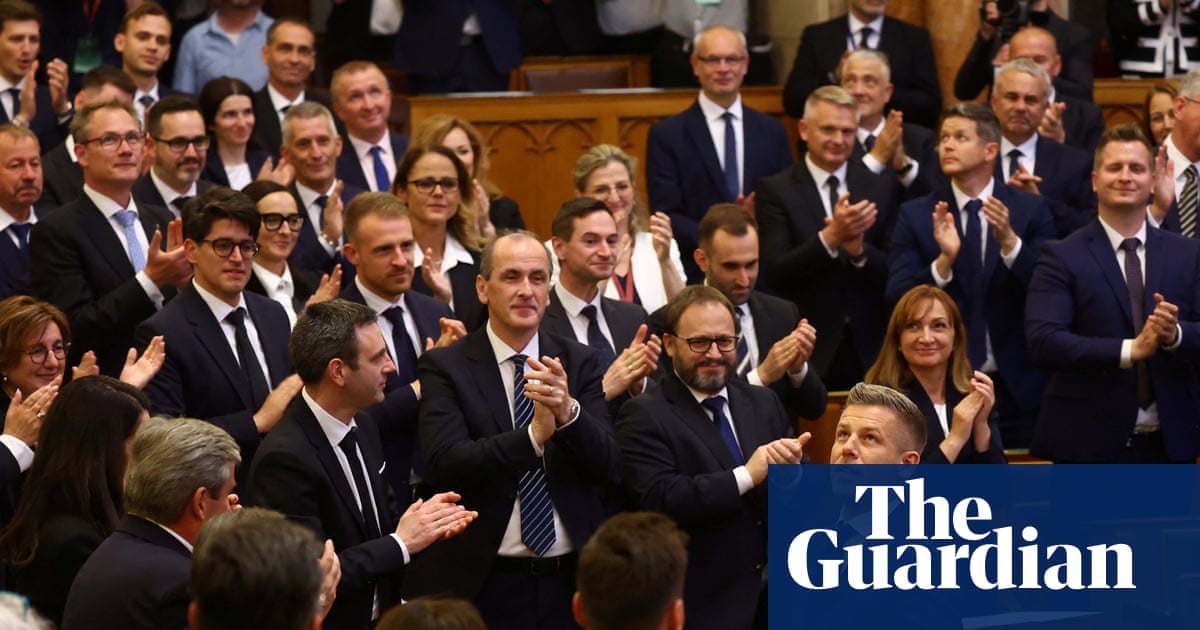
*TL;DR: Peter Magyar was sworn in as Hungary’s prime minister, ending Viktor Orban’s 16‑year tenure; his Tisza party captured 141 of 199 seats and the EU flag reappeared in the parliament chamber for the first time in 12 years.
Context Hungary’s political landscape shifted dramatically after last month’s election. Viktor Orban, who had governed for a decade and a half, lost his grip on power as voters turned to the centre‑right Tisza party. The new administration faces the task of repairing strained relations with the European Union (EU) and reviving an economy that has stalled under the previous government.
Key Facts - Peter Magyar, 45, took the oath of office in the neo‑Gothic parliament building, a ceremony that marked the first change of government since 2008. - Magyar’s Tisza party secured 141 of the 199 parliamentary seats, giving it a commanding majority to pass legislation. - The EU flag, removed by Orban’s regime, was hoisted inside the chamber for the first time in 12 years, a symbolic step toward re‑engagement with Europe. - Newly appointed parliamentary speaker Agnes Forsthoffer ordered the flag’s reinstatement, describing it as “the first symbolic step on this path back to Europe.” - Magyar has signaled a goal of unlocking roughly $20 billion in frozen EU funds that were withheld over rule‑of‑law concerns.
What It Means The swearing‑in signals a clear break from Orban’s nationalist, Russia‑friendly policies. With a robust parliamentary majority, Magyar can push reforms, but he inherits a bureaucracy reshaped by a long‑standing regime. Analysts note that dismantling entrenched networks will be a major hurdle, as will convincing skeptical voters that his right‑leaning platform differs substantively from Orban’s. Restoring Budapest’s ties to the EU will dominate early diplomatic efforts; success could free the anticipated $20 billion, providing a boost to a budget that has lagged behind targets.
The next weeks will test Magyar’s ability to translate electoral momentum into concrete policy, especially in the areas of economic recovery and EU negotiations. Watch for the first budget proposal and any formal talks with EU officials as indicators of the new government’s direction.
Continue reading
More in this thread
Michigan Secretary of State Sets Firewall to Separate Governor Campaign from Election Oversight
Nadia Okafor
Iowa Legislature Passes $9.6 Billion Budget Amid Property Tax Deal and Revenue Gap
Nadia Okafor
Greens take Hackney council after paper‑candidate surge
Nadia Okafor
Conversation
Reader notes
Loading comments...