P&G Warns $150M Middle East Drag on 2026 Earnings Despite $21.2B Q3 Sales Surge
P&G forecasts a $150M earnings drag in FY2026 from the Middle East conflict, despite $21.2B Q3 sales. The company also anticipates $150M in tariff refunds.
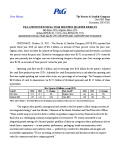
Net Sales +3%; Organic Sales +2% Diluted EPS $1.95, +21%; Core EPS $1.99, +3% MAINTAINS FISCAL YEAR SALES, EPS GROWTH AND CASH RETURN GUIDANCE The Procter & Gamble Company (NYSE:PG) reported first quarter fiscal year 2026 net sales of $22.4 billion, an increase of three percent versus the prior year. Organic sales, which excludes the impacts of foreign exchange and acquisitions and divestitures, increased two percent versus the prior year. Diluted net earnings per share were $1.95, an increase of 21% versus the prior year primarily due to higher non-core restructuring charges in the prior year. Core earnings per share were $1.99, an increase of three percent versus the prior year. Operating cash flow was $5.4 billion, and net earnings were $4.8 billion for the quarter. Adjusted free cash flow productivity was 102%. Adjusted free cash flow productivity is calculated as operating cash flow less capital spending and certain other items, as a percentage of net earnings. The Company
TL;DR
Procter & Gamble projects a $150 million after-tax earnings reduction for fiscal 2026 due to the Middle East conflict. This financial headwind emerges despite the company reporting a 7% sales increase to $21.2 billion for its third quarter.
P&G projects a $150 million after-tax earnings reduction for fiscal 2026, stemming from the ongoing Middle East conflict. This financial headwind emerges despite the consumer goods giant's strong third-quarter performance.
The company reported net sales of $21.2 billion for its third quarter of fiscal year 2026, marking a 7% increase year-over-year. This growth reflects sustained demand across P&G's extensive portfolio of household and personal care products. The sales figures indicate consumer resilience and effective market strategies.
However, the estimated $150 million earnings impact primarily arises from commodity-linked cost inflation, feedstock exposures, and disruptions in global logistics. These factors, tied directly to the Middle East conflict, are expected to increase P&G's operational costs, particularly affecting the fiscal fourth quarter. The company attributes these pressures to broader supply chain volatility.
Separately, P&G eyes a potential financial upside through pending government actions. The company estimates it could receive approximately $150 million after tax in tariff refunds. These refunds relate to prior administrative policies from the Trump administration.
However, the precise amount P&G will ultimately recover from these potential tariff refunds remains uncertain. The U.S. administration is currently outlining the process for such recoveries, introducing another variable into the company's financial outlook.
Geopolitical volatility has heightened uncertainty surrounding P&G's overall financial guidance. Sustained increases in global oil prices, potentially reaching $100 a barrel for Brent crude, could significantly affect the company's expenses. Such a rise could elevate annual costs by an estimated $1 billion after tax compared to prior levels of roughly $65 a barrel.
P&G teams are actively working to protect supply continuity and minimize cost impacts. Measures include rapid product reformulation, which adjusts product components, and supplier diversification, which broadens the network of material providers. Management maintains a focus on navigating these complex global conditions to ensure operational stability.
Investors will monitor future statements, particularly regarding fiscal 2027 guidance expected in July. The evolving situation in the Middle East and the clarity on tariff refunds will further inform P&G's long-term cost and earnings trajectory.
Continue reading
More in this thread
Conversation
Reader notes
Loading comments...