Over 350 Molecules Catalogued in Space, Yet Many Claims Remain Unverified
More than 350 molecules have been detected in space, but many claims lack robust verification. Learn why multiple spectral lines matter.
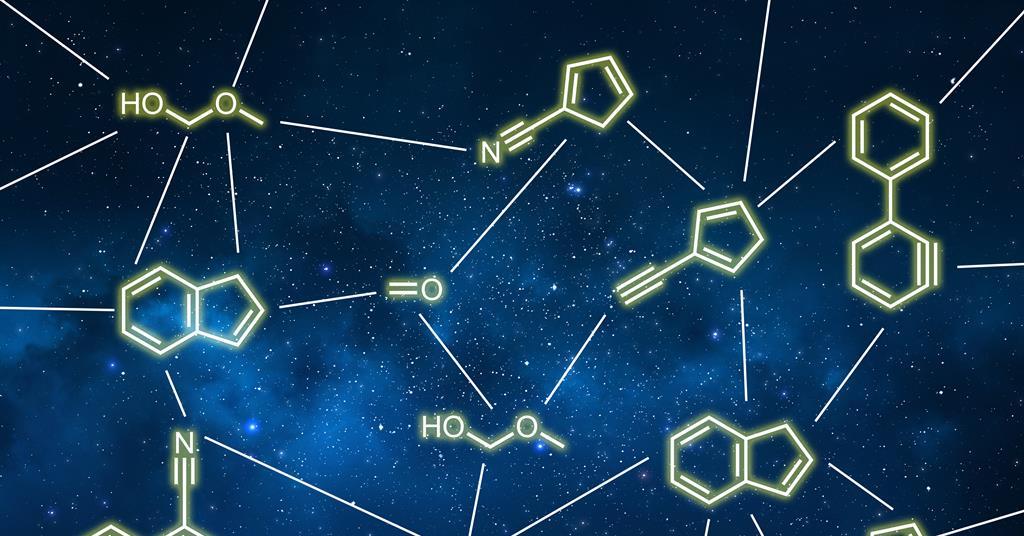
Space organics
TL;DR
Over 350 distinct molecules have been catalogued in interstellar space, but detections relying on one or two spectral lines frequently collapse under further scrutiny.
Context Astronomers have been tallying the chemical inventory of the cosmos since the first interstellar molecule was spotted in 1937. Radio telescopes capture the faint photons emitted by gas‑phase molecules; each molecule produces a unique pattern of frequencies, known as its spectral fingerprint. Researchers first record these fingerprints in laboratory vacuum tubes, then match them to telescope data from nebulae, planetary atmospheres, and distant galaxies.
Key Facts The current census exceeds 350 molecules, with new entries added each year. This growth reflects advances in telescope sensitivity and expanded laboratory databases. However, the mere presence of a matching frequency does not guarantee a discovery. A high‑profile case involved the claimed detection of glycine, the simplest amino acid, more than two decades ago. Subsequent analysis showed that essential spectral lines were absent, leading to a retraction of the claim.
Astrochemist Olivia Harper Wilkins cautions against headlines that celebrate single‑line detections. She notes that a finding confirmed by five or more independent spectral lines carries far greater weight than one based on only one or two. In practice, the community waits several months after an initial report; independent groups then test the claim with their own observations. Those that survive this peer verification become part of the accepted molecular inventory.
What It Means The expanding molecular roster underscores that complex chemistry thrives even in the harsh vacuum of space, providing raw material for pre‑biotic processes. Yet the rigorous verification pipeline ensures that only robust detections shape our understanding. As telescope arrays like the Atacama Large Millimeter/submillimeter Array continue to improve resolution, the line between tentative signal and confirmed molecule will sharpen. Watch for upcoming surveys that aim to double the current count and for any new claims that survive the five‑line test.
Continue reading
More in this thread
Over 350 Molecules Catalogued in Space, Glycine Claim Falters, Phosphine Debate Persists
Dr. Leo Tanaka
DOE Reactivates $430 Million Hydropower Fund as Vineyard Wind Cuts Massachusetts Bills by $1.4 Billion
Dr. Leo Tanaka
Solar Trigeneration System Raises Oil Outlet Temp 39% and Boosts Efficiency 24%
Dr. Leo Tanaka
Conversation
Reader notes
Loading comments...