Oscars Restrict Awards to Human Acting and Writing
The Academy now bars AI‑generated performances and scripts from Oscar eligibility, marking a substantive rule change for acting and writing categories.
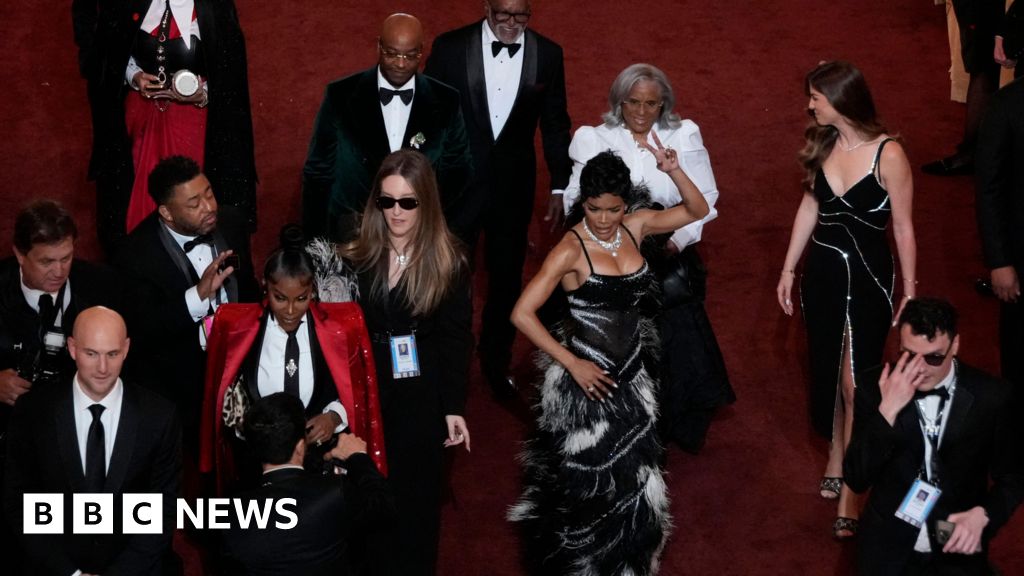
Actor and singer Teyana Taylor wearing a fitted gown of black and white feathers as she shimmies down the red carpet of the Acadamy Awards surrounded by other attendees.
TL;DR
The Academy has ruled that only acting performed by humans and writing authored by humans can be nominated for Oscars, a substantive shift in eligibility rules.
The Academy of Motion Picture Arts and Sciences announced updated eligibility criteria as artificial‑intelligence tools become commonplace in film production. The new rules apply only to the categories of acting and writing, leaving other uses of AI unregulated for award consideration.
Key Facts - Eligibility now requires that acting be "demonstrably performed by humans" and that scripts be "human‑authored." The Academy described this as a substantive change to Oscar rules. - The rule change does not ban AI in other aspects of filmmaking; the Academy will assess the degree of human involvement on a case‑by‑case basis. - The Academy reserves the right to request detailed information about any AI use that could affect a nomination. - Val Kilmer, who died in 2025, will be recreated with AI for a lead role in an upcoming film, illustrating the technology’s growing presence.
What It Means The decision draws a clear line between human creativity and machine‑generated content for the industry’s most prestigious awards. By limiting eligibility to human‑performed acting and human‑written scripts, the Academy aims to preserve the artistic integrity of the Oscars while still allowing filmmakers to experiment with AI in visual effects, editing, or other non‑creative support roles.
Studios can continue to use AI for tasks such as background generation or post‑production enhancements, but any performance or screenplay that relies on AI‑generated output will be ineligible for nomination. The rule may prompt producers to disclose AI involvement early in the production process to avoid disqualification.
The change arrives amid high‑profile cases of AI‑recreated actors and fully synthetic scripts, sparking legal battles over copyright and ethical concerns. While the Academy stops short of a blanket ban, the new criteria signal a cautious approach to integrating AI while protecting the human element that defines cinematic storytelling.
Looking ahead, the industry will watch how studios adapt their workflows and whether further restrictions emerge as AI capabilities expand.
Continue reading
More in this thread
Conversation
Reader notes
Loading comments...