OpenAI Confidential IPO Filing Aims for $1 Trillion Valuation
OpenAI eyes a $1 trillion IPO after raising nearly $200 billion privately and prevailing in a legal battle with Elon Musk.
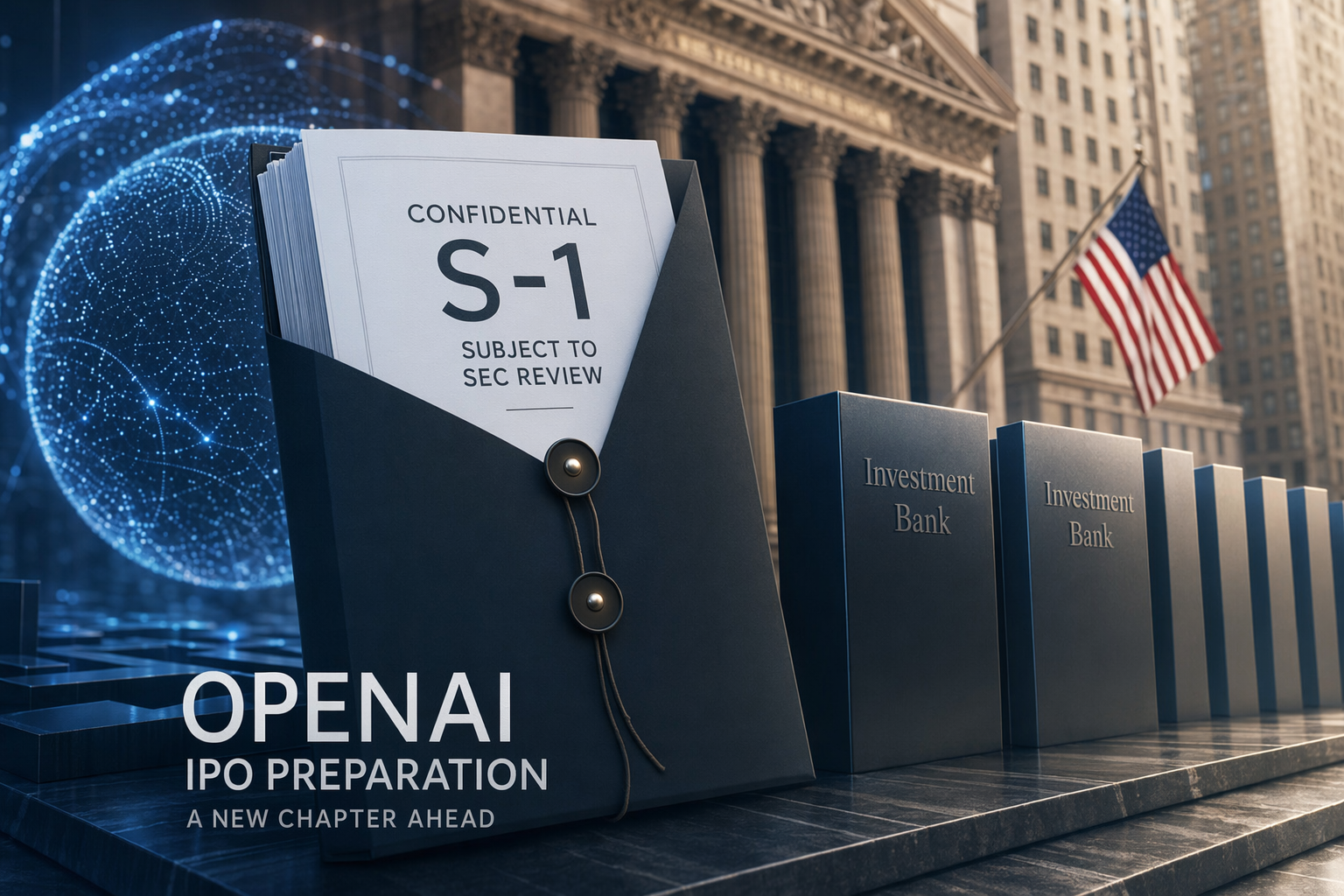
Illustration representing OpenAI preparing for a public offering and Wall Street IPO process
TL;DR
OpenAI is preparing a confidential IPO filing that could value the company above $1 trillion after raising nearly $200 billion privately and winning a legal dispute with Elon Musk.
Context: OpenAI has worked with Morgan Stanley, Goldman Sachs, and law firm Cooley on a draft prospectus that may be filed with the SEC as early as Friday. A confidential filing lets the company gauge investor interest without revealing financial details publicly. The timing aims for a September listing, though it could shift depending on market conditions and the upcoming SpaceX IPO, which is expected in June at a potential $1.75 trillion valuation.
Key Facts: The potential IPO would price OpenAI at over $1 trillion, making it one of the largest public offerings in history. As a private entity, OpenAI has secured close to $200 billion in funding, an unprecedented sum for a startup. Earlier this week, a court ruled in OpenAI’s favor against Elon Musk, who had alleged the company abandoned its original nonprofit mission; the ruling lets OpenAI retain its current for‑profit structure and fundraising path, though Musk may appeal.
What It Means: A public listing would turn OpenAI into a traded proxy for generative AI demand, testing whether investors are willing to fund the heavy compute costs that frontier AI models require. Comparable tech giants show the scale: Microsoft (MSFT) holds a market cap of about $3.03 trillion, Nvidia (NVDA) around $2.2 trillion, and Alphabet (GOOGL) near $1.8 trillion.
Watch next: Market watchers will track the SEC filing date, any movement in AI‑linked stocks such as MSFT, NVDA, and GOOGL, the outcome of Musk’s expected appeal, and the SpaceX IPO pricing for clues about investor appetite for mega‑scale tech offerings.
Continue reading
More in this thread
Conversation
Reader notes
Loading comments...