Olympic rower tests zero‑gravity gym that could cut astronaut workouts to 30 minutes
An Olympic medallist tried the HIFIm device that could cut astronaut exercise time to 30 minutes a day and handle 300 exercises without power.
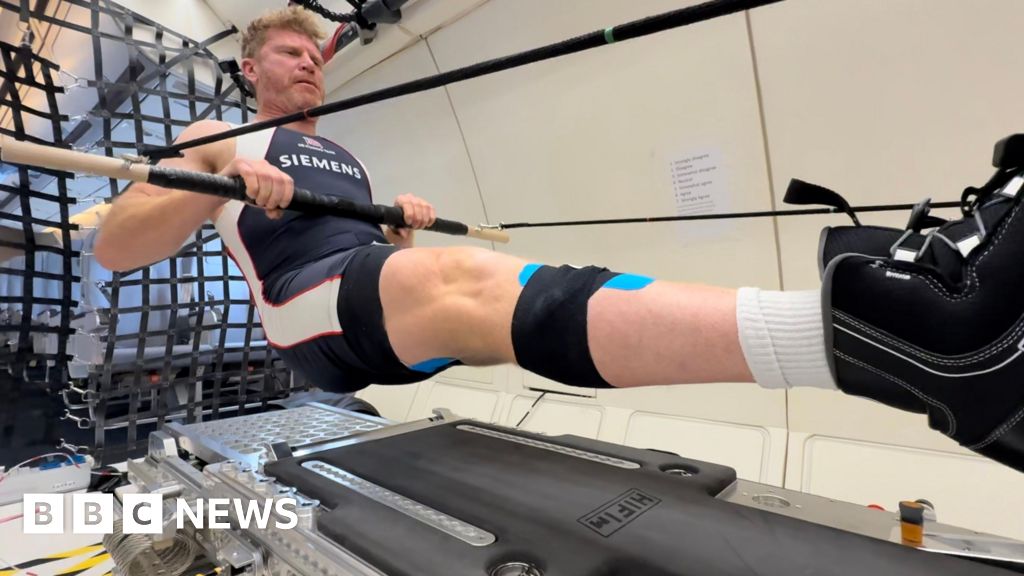
Matthew Wells, olympic medalist, floats as he rows on a parabolic flight.
TL;DR An Olympic rower tried a zero‑gravity gym that could cut astronaut exercise time to 30 minutes a day. The HIFIm device can run 300 exercises without needing electrical power.
Context
Matthew Wells, a British Olympic bronze medallist in rowing, climbed aboard a plane flying parabolic arcs to create 22 seconds of weightlessness. At 8,500 m altitude he rowed as hard as he could while his body floated upward.
The flight mimics the microgravity astronauts experience, giving researchers a brief window to test equipment. Wells is part of a global effort to build fitness gear for future moon bases and space stations.
Current astronauts on the International Space Station spend about two hours each day exercising to counter muscle and bone loss. The European Space Agency, NASA, the Canadian Space Agency and the UK Space Agency have all supported the testing, including providing the parabolic flights.
Key Facts
Wells remarked, “Isn't it every kid's dream to be an astronaut?” He said contributing to hardware that might fly in space feels “out of this world.”
The HIFIm (High‑Frequency Impulse for Microgravity) system could reduce daily astronaut workout time to 30 minutes, according to its developers. Its inventor, John Kennett, notes the compact unit can handle 300 different exercises.
Kennett adds that the device works without electricity and isolates vibrations so it does not disturb sensitive experiments or the spacecraft structure.
What It Means
Shorter workouts would free astronaut time for science, potentially accelerating research on the Moon and beyond.
By cutting exercise from two hours to 30 minutes, crews could devote more hours to experiments, maintenance or rest.
The technology also addresses launch mass limits because HIFIm is lightweight and power‑free. If validated, such gear could become standard on Artemis missions and future lunar habitats. Engineers will next run HIFIm through longer parabolic campaigns and seek opportunities for orbital demonstration flights.
Continue reading
More in this thread
Conversation
Reader notes
Loading comments...