Olympic Rower Tests Oscar‑Built Space Gym That Could Cut Astronaut Workout to 30 Minutes
Testing by an Olympic rower shows the HIFIm device, built by Oscar‑winning special‑effects engineers, could reduce astronaut daily exercise from two hours to 30 minutes, freeing time for science.
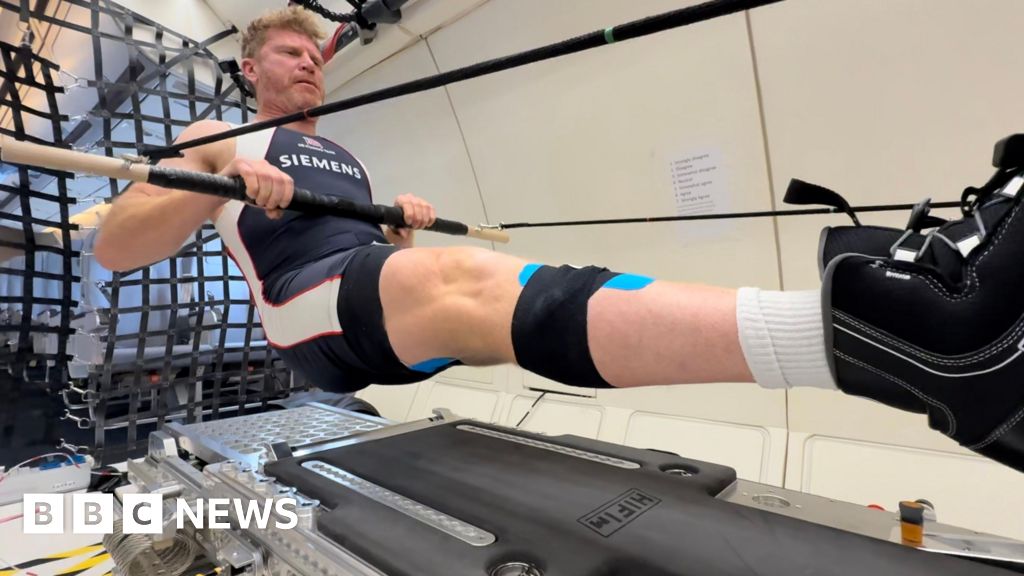
Matthew Wells, olympic medalist, floats as he rows on a parabolic flight.
TL;DR
An Olympic‑medalist rower tried a new space‑exercise device built by Oscar‑winning special‑effects engineers that could shrink astronaut daily workouts from about two hours to just 30 minutes. The HIFIm system, tested in parabolic flights, aims to free up crew time for science on future Moon and station missions.
Context
Astronauts on the International Space Station currently spend roughly two hours each day exercising to counteract muscle and bone loss in microgravity. That time cuts into the hours available for experiments and maintenance.
Current hardware includes a treadmill, a stationary bike and a resistance‑based device, each bulky and power‑hungry. Engineers worldwide are competing to build lighter, more efficient gear for upcoming lunar bases and deep‑space habitats.
Key Facts
- The HIFIm (High‑Frequency Impulse for Microgravity) exercise kit was designed by a team of Oscar‑winning special‑effects engineers from Pinewood Studios, whose credits include 1917, Star Wars, James Bond and Mission Impossible. - Olympic medallist Matthew Wells, who rowed in a plane creating 22‑second weightless bouts, said, “Isn’t it every kid’s dream to be an astronaut?” after trying the device. - Early tests show HIFIm could reduce the required daily exercise from about two hours to 30 minutes while still preserving muscle mass, bone density and cardiovascular fitness.
What It Means
If HIFIm performs as promised, crews could devote an extra 90 minutes each day to scientific work, equipment upkeep or rest, potentially accelerating research on the Moon and beyond. The device’s lack of electrical power and vibration isolation also means it could operate alongside sensitive experiments without interference. Its developers claim it can handle 300 different movements, offering versatility for long‑duration missions.
What to watch next
Further parabolic‑flight campaigns and ground‑based trials will verify HIFIm’s effectiveness over weeks, and a decision on its inclusion in Artemis‑era lunar gateway or surface habitats is expected within the next 18 months.
Continue reading
More in this thread
Conversation
Reader notes
Loading comments...