O’Leary Says Tokenization Stalls Until U.S. Crypto Law Passes, Cites 97% Market Concentration
Kevin O’Leary warns that without a federal legal framework, tokenized assets and Bitcoin will stay fringe investments, noting 97% market concentration in BTC and ETH.
TL;DR
Kevin O’Leary argues that tokenization and Bitcoin will not gain institutional acceptance until Congress enacts a clear digital‑asset law, noting that Bitcoin and Ether make up 97% of crypto market value.
Context
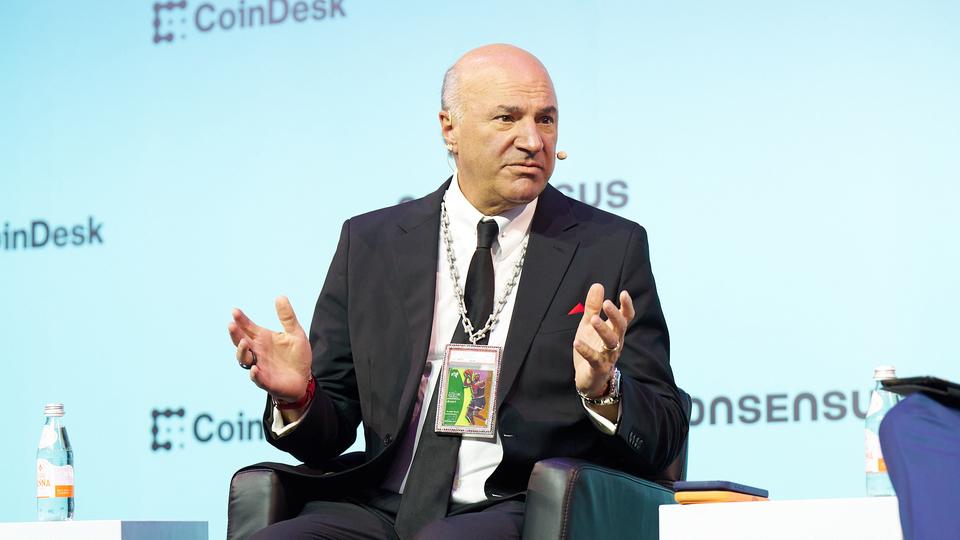
At the Consensus conference in Miami, the investor and TV personality warned that Wall Street’s enthusiasm for turning real‑world assets into blockchain tokens is largely hype. He pointed to the ongoing regulatory vacuum in the United States as the primary barrier for large funds and index providers.
Key Facts
- O’Leary stated that tokenized securities and Bitcoin are “fringe assets” for major institutional investors, meaning they are not currently considered investable by the biggest asset managers. - He highlighted that Bitcoin (ticker BTC) and Ether (ticker ETH) together account for 97% of the total cryptocurrency market capitalization, leaving the remaining 3% spread across thousands of smaller tokens. - The entrepreneur emphasized that a formal legal framework—specifically a bill that aligns with the Securities and Exchange Commission (SEC) and passes Congress—is required for blockchain adoption to move beyond experimental pilots. - He cited the rapid uptake of stablecoins after the passage of the GENIUS Act as evidence that clear rules can trigger swift institutional participation.
What It Means
Tokenization promises continuous trading and near‑instant settlement for assets such as stocks, bonds, or real‑estate shares, potentially cutting settlement times from days to minutes and reducing costs. However, without legal certainty, banks and fund managers are reluctant to allocate capital to these digital representations. The concentration of market value in BTC and ETH suggests that most institutional exposure is limited to the two largest cryptocurrencies, while the broader token ecosystem remains marginal.
If Congress delivers a comprehensive digital‑asset bill, compliance costs could fall, and the SEC’s oversight would provide the risk‑management framework that index providers demand. This could unlock capital for tokenized versions of traditional assets, expanding the market beyond the current BTC/ETH duopoly.
Looking Ahead
Watch for legislative developments in the U.S. Congress and any SEC guidance on tokenized securities, as these will determine whether tokenization moves from hype to mainstream finance.
Continue reading
More in this thread
Conversation
Reader notes
Loading comments...