Ocean Winds Starts 30 MW Floating Wind Farm in France, Powering 50,000 Homes
Ocean Winds' EFGL floating wind farm began delivering 30 MW of clean power off France, enough for 50,000 homes, marking a milestone for offshore wind.
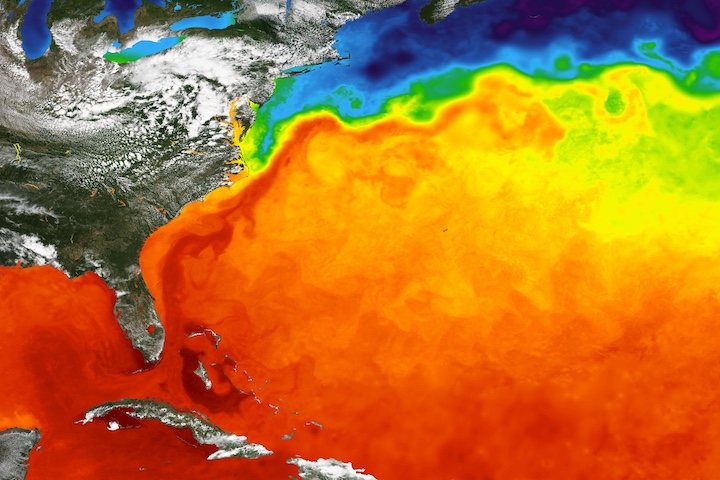
GHRSST Sea Surface Temperature showing the Gulf Stream of the Atlantic Ocean on 29 May 2024
TL;DR
Ocean Winds' 30 MW EFGL floating wind farm entered commercial operation on May 4, 2026, delivering enough electricity to power roughly 50,000 homes.
Context The EFGL (Éoliennes Flottantes du Golfe du Lion) project marks Ocean Winds' second floating offshore wind farm and its first in French waters. Situated 16 km off Port‑La Nouvelle in the Mediterranean, the pilot uses three 10 MW turbines mounted on floating foundations, a design suited to deep‑water sites where fixed towers are impractical.
Key Facts - Production began on May 4, 2026, feeding electricity into the French grid. - Annual output is projected at 110,000 MWh, equivalent to the average consumption of 50,000 people. - The farm will operate for a 20‑year lifespan, delivering clean energy throughout that period. - Roughly 85 % of direct suppliers are French firms, with 60 % classified as small‑ and medium‑sized enterprises, reinforcing a European supply chain. - The site includes Biohut® artificial habitats created by Ecocean, making EFGL the world’s first nature‑inclusive floating wind farm. - CEO Craig Windram highlighted the milestone as proof of Ocean Winds' 15‑year leadership in floating offshore wind and its ability to deliver reliable projects worldwide.
What It Means EFGL demonstrates that floating wind technology can be deployed at commercial scale in the Mediterranean, expanding the geographic reach of offshore renewables beyond shallow coastal zones. The project's local procurement model supports regional economies and showcases a replicable template for future developments, such as the planned 250 MW EFLO project in Occitanie. By delivering 30 MW of renewable power immediately, EFGL contributes to France’s energy sovereignty and reduces reliance on fossil fuels. The integration of marine habitats sets a new benchmark for environmentally responsible offshore projects.
Looking Ahead Watch for the commissioning of larger floating farms in Europe and the scaling of nature‑inclusive designs that could become standard in offshore wind development.
Continue reading
More in this thread
Conversation
Reader notes
Loading comments...