Nvidia's Madison Huang to Discuss Physical AI Partnerships with Samsung and SK hynix
Nvidia executive Madison Huang discusses physical AI partnerships with Samsung and SK hynix, aiming to expand GPU clusters and AI infrastructure in South Korea.
TL;DR
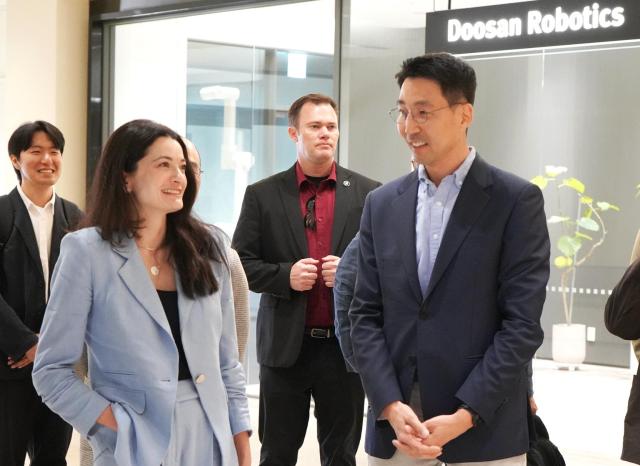
Nvidia’s senior director Madison Huang will meet Samsung and SK hynix on Wednesday to advance physical AI collaborations and scale GPU clusters in South Korea.
Context Madison Huang, who leads product and technical marketing for Nvidia’s physical AI platforms, is in Seoul for a series of high‑level talks. Her portfolio includes Nvidia Omniverse, a simulation environment for industrial AI, and robotics tools that support the company’s push into digital manufacturing.
Key Facts - On Wednesday, Huang will sit down with officials from Samsung Electronics and SK hynix to explore joint projects in physical AI, the term used for AI that interacts with the real world through robotics, simulation and industrial control. - Samsung and SK hynix supply the high‑bandwidth memory chips that power Nvidia’s AI GPUs, the processors that train large language models and other data‑intensive algorithms. - The three companies have already launched a partnership that places large GPU clusters in South Korea, bolstering the nation’s AI infrastructure and enabling AI‑driven robots, factories and other industrial platforms. - The meetings follow Huang’s recent engagements with LG Electronics, Hyundai Motor and a lecture at Seoul National University, signaling a broader outreach to Korean industry.
What It Means The talks aim to lock in a supply chain for memory components critical to Nvidia’s AI hardware, reducing the risk of shortages that have hampered AI development worldwide. By aligning Samsung’s and SK hynix’s memory technology with Nvidia’s GPU and simulation platforms, the partnership could accelerate the deployment of AI‑powered manufacturing lines and autonomous systems across South Korea.
For Samsung and SK hynix, deeper integration with Nvidia offers a pathway to monetize their memory products beyond consumer devices, tapping into the fast‑growing AI training market. For Nvidia, securing reliable memory sources strengthens its position as the leading supplier of AI accelerators and expands its footprint in the industrial sector.
The meetings also reflect a strategic shift toward “physical AI,” where simulation and robotics complement pure software models. Success could set a template for similar collaborations in other regions, linking chipmakers, AI hardware vendors and industrial users.
What to watch next Follow the outcomes of Wednesday’s discussions for announcements on new GPU cluster deployments, joint research initiatives, or supply agreements that could reshape South Korea’s AI ecosystem.
Continue reading
More in this thread
Conversation
Reader notes
Loading comments...