NVIDIA Buys Gretel Labs as Synthetic Tabular Data Market Eyes $9.24 B by 2030
NVIDIA's purchase of Gretel Labs positions it for the synthetic tabular data market projected to hit $9.24 billion by 2030, growing at 37.5% CAGR.
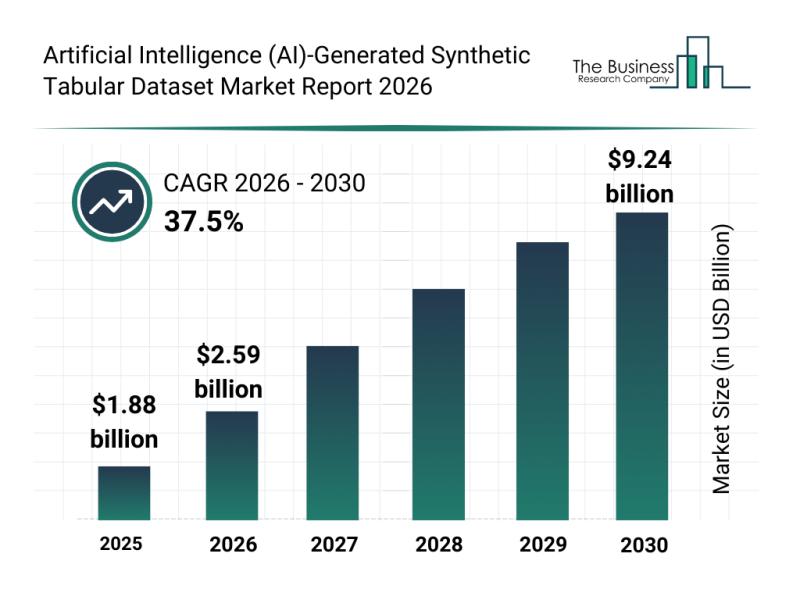
*TL;DR: NVIDIA’s purchase of Gretel Labs aligns it with a synthetic tabular data market forecast to reach $9.24 billion by 2030, growing at a 37.5% CAGR.
Context Synthetic tabular data—artificially generated tables that mimic real datasets—has become a cornerstone for training AI models while preserving privacy. Regulators are tightening rules on personal data, prompting firms to seek alternatives that avoid exposing sensitive information.
Key Facts - The global market for AI‑generated synthetic tabular datasets is projected to be worth $9.24 billion in 2030. - Growth is driven by a compound annual growth rate of 37.5% from now through 2030. - In March 2025, NVIDIA acquired Gretel Labs, a company specializing in privacy‑focused synthetic data APIs and tools. - NVIDIA plans to embed Gretel’s technology into its developer platforms and cloud services, enabling realistic synthetic tables, time‑series, and text data for AI training. - Leading players such as IBM, DataRobot, and Mostly AI are advancing techniques like auto‑regressive tabular generative networks (ARGN), which produce high‑fidelity data with built‑in differential privacy and bias controls.
What It Means NVIDIA’s move signals a strategic bet on synthetic data as a growth engine for its AI ecosystem. By integrating Gretel’s privacy‑preserving generators, NVIDIA can offer developers a turnkey solution for creating high‑quality training data without breaching regulations. This capability is especially valuable for large language models that require massive, diverse datasets.
The market’s rapid expansion reflects broader industry pressures: companies need scalable, secure data for model development, and synthetic data promises to meet that demand while reducing legal risk. As ARGN‑based tools become more efficient—some delivering training speeds up to 100× faster—the barrier to adopting synthetic data lowers, encouraging wider uptake across sectors from finance to healthcare.
For competitors, NVIDIA’s acquisition raises the stakes. Firms that cannot match the combined compute power and synthetic data expertise may lose market share in AI‑driven services. Conversely, the surge in demand could spur new entrants focused on niche regulatory environments or specialized data schemas.
Looking Ahead Watch for NVIDIA’s rollout of Gretel‑powered services within its cloud platform and for industry adoption metrics that reveal how quickly synthetic tabular data replaces real datasets in AI pipelines.
Continue reading
More in this thread
Rivian Deploys Onboard AI Assistant to All Gen1 and Gen2 EVs via Software Update 2026.15
Alex Mercer
Amazon Devices Chief Panos Panay Says New Smartphone Not a Priority, Cites Fire Phone Lesson
Alex Mercer
WhatsApp Unveils Incognito AI Chat Mode, Sparking Privacy and Accountability Debate
Alex Mercer
Conversation
Reader notes
Loading comments...