North Carolina Democrats Push 'No Budget No Pay' Bill for Legislative Accountability
North Carolina Democrats propose 'No Budget No Pay' bill to withhold lawmaker salaries until a state budget passes, targeting legislative accountability.
TL;DR
North Carolina Democratic Senators have introduced legislation to halt lawmaker salaries until the state's budget receives final approval, emphasizing legislative accountability amidst a protracted financial stalemate. This initiative seeks to compel action on the state's financial plan.
North Carolina legislators face a potential disruption to their paychecks following the introduction of a 'No Budget No Pay' bill. The state currently operates without a ratified budget for the 2026-2027 fiscal year, extending an impasse that has lasted 295 days since lawmakers last left the capital without a resolution.
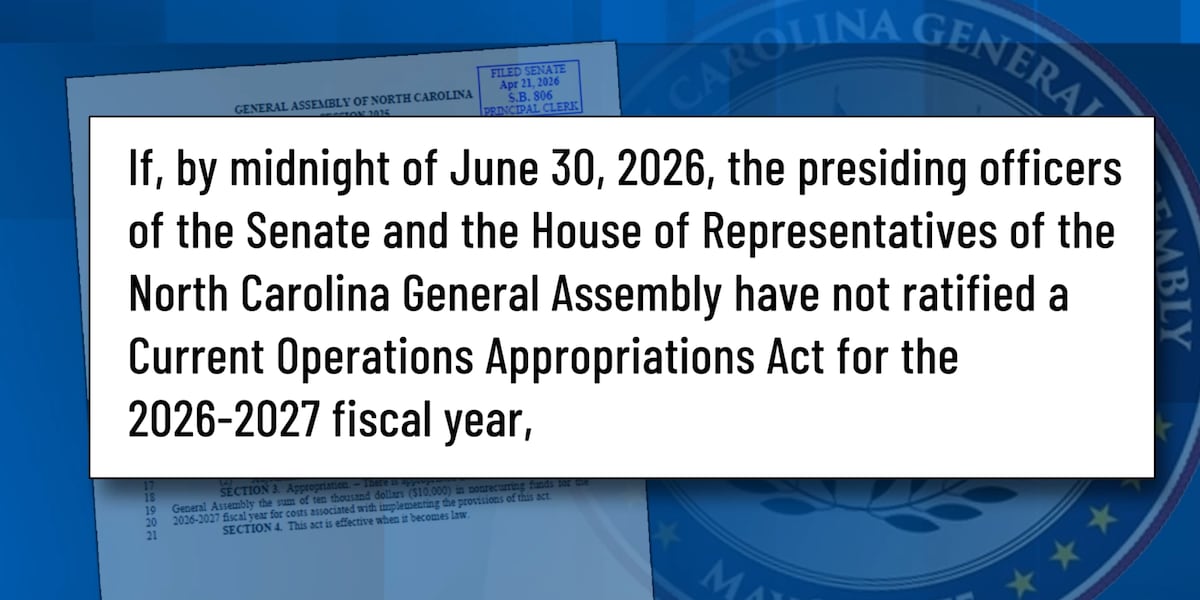
Senate Bill 806, introduced by Senators Woodson Bradley, Lisa Gafstein, and Terence Everitt, targets this budgetary delay. The proposed legislation stipulates that if a current operations appropriations act for the 2026-2027 fiscal year is not ratified by June 30, 2026, all compensation for members of the General Assembly will be held in an escrow account. Lawmakers would not receive these funds until a state budget is officially approved.
North Carolina legislators earn an annual salary of $13,800. This amount would be withheld under the terms of the bill. Senator Woodson Bradley commented on the measure, stating that lawmakers have a primary duty to pass a budget and should remain in session until that task is complete, underscoring accountability to the public.
The bill's introduction highlights the ongoing challenges in North Carolina's legislative process, placing direct financial pressure on lawmakers to reach a consensus. With Republicans holding a majority in the Senate, the bill's path to passage remains uncertain. The measure represents a distinct effort to incentivize budget completion.
Moving forward, observers will watch the General Assembly for any movement on Senate Bill 806 and whether it gains bipartisan support. The focus remains on how legislative leaders will address the state's budget deficit and if this new pressure will accelerate a resolution.
Continue reading
More in this thread
Conversation
Reader notes
Loading comments...