New York Drops 2030 Climate Goal, Sets 2040 60% Emissions Target
New York shifts its climate strategy, replacing the 2030 goal with a 2040 60% emissions target, new regulations due by 2028, and a change to 100‑year GHG accounting.
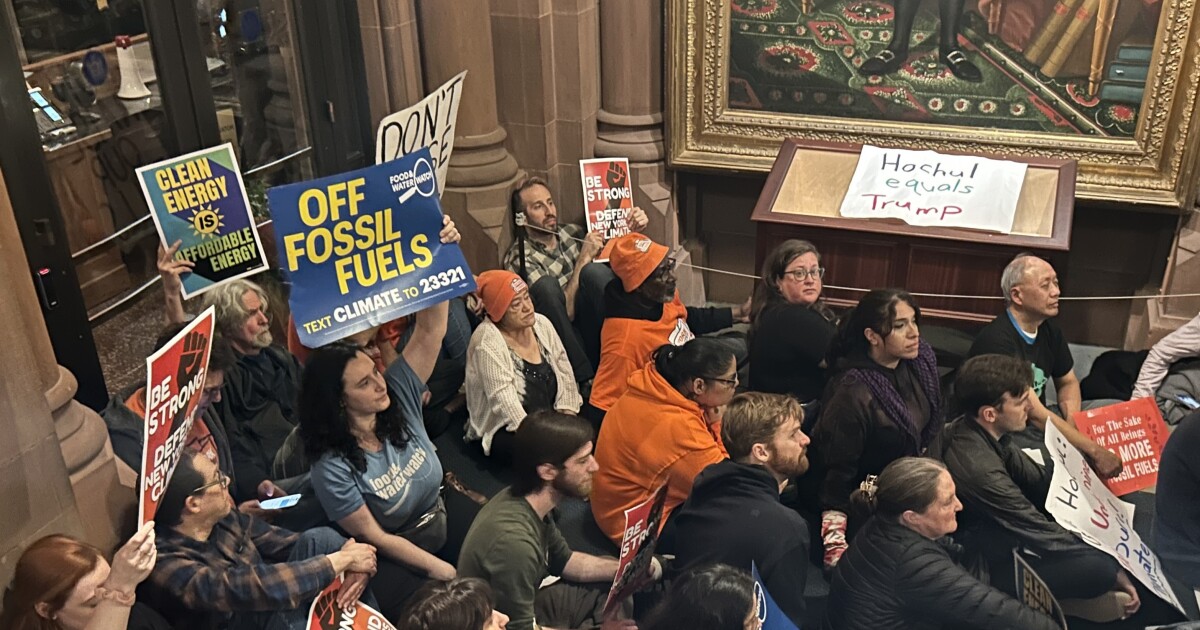
Protesters outside New York Gov. Kathy Hochul's office on March 25, 2026, in Albany urged her to back off her push to rollback regulations in the state's climate law.
TL;DR
New York has abandoned its 2030 climate target and will now aim for a 60% cut in greenhouse‑gas emissions by 2040, with regulations due by 2028 and a shift to a 100‑year accounting method. The change reflects Governor Hochul’s warning that the original timeline would raise energy costs for residents and businesses.
Context The 2019 Climate Leadership and Community Protection Act mandated a 40% cut by 2030 and an 85% cut by 2050, with regulations due by 2024. A state court ordered the Department of Environmental Conservation to issue those rules by early 2026 unless the law changed, and Governor Hochul warned that meeting those deadlines would impose “crushing costs” on New Yorkers. The revised targets were included in the 2027 state budget agreement reached with legislative leaders, which also allocates additional funding for grid modernization.
Key Facts - New York will target a 60% emissions reduction by 2040, requiring regulators to adopt rules by 2028. - The state will switch its greenhouse‑gas accounting from a 20‑year to a 100‑year global warming potential standard, a move officials say makes the target easier to achieve. - Governor Hochul stated the state must balance clean‑energy ambitions with affordability, noting that the original timeline would drive up energy prices.
What It Means The revised timeline gives regulators four extra years to craft rules, potentially easing compliance for utilities and industry. The accounting shift lowers the reported impact of short‑lived pollutants, which can make percentage cuts appear larger without additional cuts, while industry analysts note the extended timeline could preserve manufacturing jobs in energy‑intensive sectors. Critics argue the adjustments weaken the state’s climate ambition, but supporters say they protect households from price spikes, and the state remains committed to the 2050 net‑zero goal.
What to watch next Watch for the draft regulations expected in late 2027, any legal challenges to the revised timeline, and how utility rates respond as the 2028 deadline approaches.
Continue reading
More in this thread
Conversation
Reader notes
Loading comments...