NASA Tests On-Demand IV Fluid Maker on ISS to Overcome Shelf-Life Limits for Deep Space Missions
NASA is testing IVGEN Mini on the ISS, an on-demand IV fluid generator to solve shelf-life limits for long-duration missions and reduce cargo weight for deep space travel.
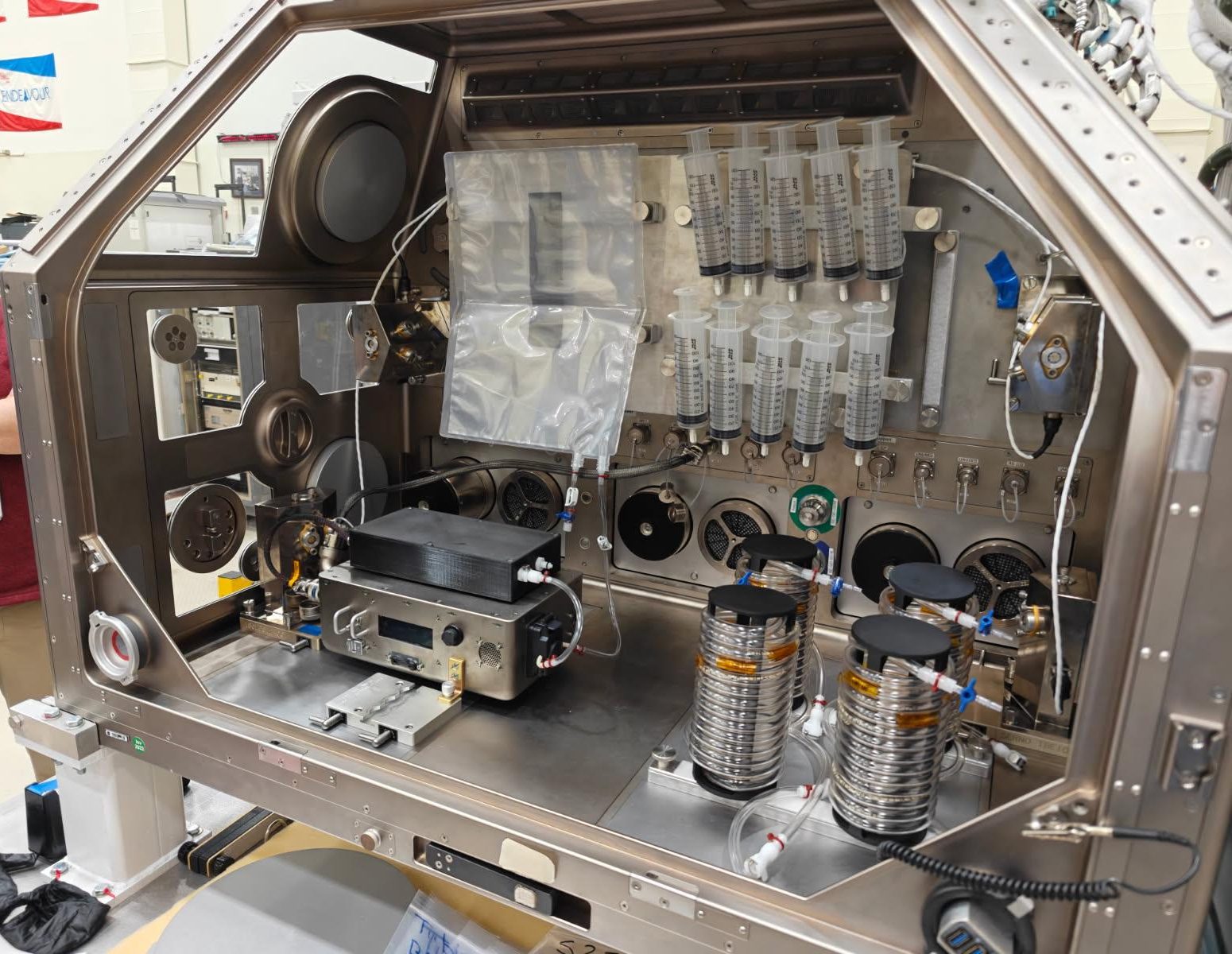
A large metal housing box containing the IVGEN Mini system is set up to create IV fluid. It includes the filtering system (two small boxes with cords attached), one plastic input bag, one plastic output bag, 10 syringes, additional cording, and four silver cylinder-shaped pieces of equipment.
TL;DR
NASA is testing an on-demand intravenous (IV) fluid generator aboard the International Space Station to address shelf-life limitations for long-duration space missions. This technology converts water into medical-grade fluid, crucial for future deep space exploration beyond low Earth orbit.
Context Astronauts on extended missions require intravenous (IV) fluid, a sterile mix of sodium chloride and purified water, to treat medical issues like dehydration or burns. This fluid can address up to 30% of medical conditions encountered in flight. However, current pre-packaged IV fluid has a limited shelf life of 16 months. This poses a significant challenge for deep space missions, which could last up to three years, far exceeding existing supplies' viability. Resupplying these critical medical items is impractical for distant destinations.
Key Facts To overcome this critical limitation, NASA developed the IntraVenous Fluid GENeration Miniaturized (IVGEN Mini) system. Northrop Grumman’s CRS-24 mission delivered IVGEN Mini to the International Space Station on April 11. This device functions by transforming the station's drinking water into sterile IV fluid. It first filters out particulates and mineral ions, then combines the processed water with premeasured sodium chloride in an output bag.
The system efficiently produces 1.2 liters of IV fluid per hour. NASA plans extensive testing in May, during which astronauts will operate IVGEN Mini to generate 10 liters of fluid over two days. This fluid will return to Earth for rigorous analysis to verify its safety and performance, ensuring it meets United States Pharmacopeia standards for quality and sterility.
What It Means IVGEN Mini's capability to create IV fluid on demand directly negates the need to pack large, perishable quantities of pre-made fluid. This innovation directly solves the shelf-life problem for multi-year missions, guaranteeing medical readiness throughout. Furthermore, the system significantly reduces cargo weight, a crucial factor for deep space travel where every kilogram of payload is meticulously planned. This miniaturized system represents a substantial advancement from a larger 2010 prototype, demonstrating continued progress in vital space medical technology. It offers a solution that keeps essential medical supplies always within their expiration period, mitigating a key risk for crew health.
Next Steps Engineers are now planning further shelf-life testing of the IV fluid produced by the system to fully validate its long-term viability. This technology, managed by NASA's Mars Campaign Office, remains a key enabler for future human exploration of the Moon and Mars, providing a self-sufficient medical supply chain for extended journeys.
Continue reading
More in this thread
Apple’s entry‑level M4 Mac mini goes ‘currently unavailable’ as desktop ship times stretch to weeks
Alex Mercer
Intel Q1 Beats Estimates as Data Center AI Sales Jump 22% and CEO Sees CPU Resurgence
Alex Mercer
45% of Employees Use Unsanctioned AI at Work, Highlighting Governance Enforcement Gap
Alex Mercer
Conversation
Reader notes
Loading comments...