NASA’s Lithium‑Plasma Thruster Hits 120 kW Record, Advancing Toward Megawatt Mars Propulsion
NASA’s new electric thruster reaches 120 kW, a key step toward the megawatt power needed for crewed Mars missions.
TL;DR
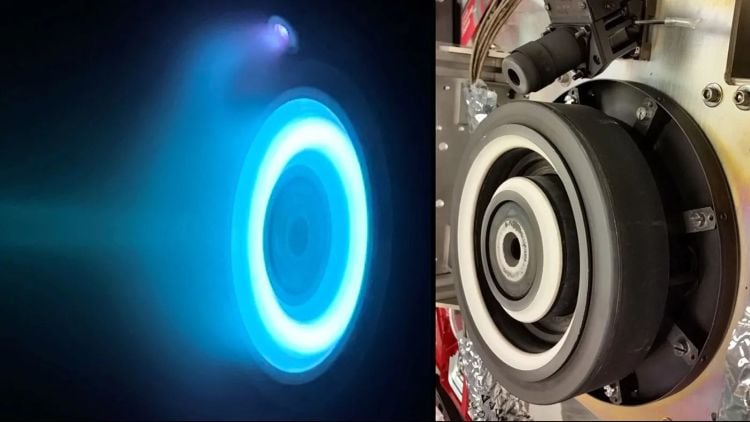
NASA’s lithium‑plasma electric thruster achieved 120 kW in U.S. tests, confirming it can meet power targets for future Mars missions that will require 2‑4 MW.
Context
Electric propulsion uses electricity to accelerate ionized gas, producing thrust with far less fuel than chemical rockets. NASA’s latest system burns lithium metal vapor to create plasma, enabling continuous, efficient acceleration over months or years. The technology is being matured for crewed missions to Mars, where high power and long runtimes are essential.
Key Facts
The thruster reached a record 120 kilowatts of power during testing at a NASA facility in the United States. James Polk of NASA JPL called the test a huge moment, saying it verified the thruster works, hit targeted power levels, and provides a testbed for scaling up. NASA estimates a future human Mars mission will need 2 to 4 megawatts of power from multiple thrusters, operating continuously for about 23,000 hours, roughly 2.6 years.
What It Means
Achieving 120 kW demonstrates the core technology can handle the power levels required for a single thruster unit. Scaling to the 2‑4 MW range will involve clustering many units and ensuring they withstand extreme temperatures above 2,800 °C. Success would cut propellant mass by up to 90 % compared with chemical systems, allowing larger payloads or faster transit times.
Watch for upcoming tests that cluster multiple thrusters to approach megawatt‑scale output and for durability trials that simulate multi‑year operation.
Continue reading
More in this thread
Conversation
Reader notes
Loading comments...