NASA’s Lithium‑Plasma Thruster Reaches 120 kW, Paving Way for Megawatt Mars Engines
NASA’s lithium‑plasma thruster reached 120 kW, 25× Psyche’s power, moving megawatt‑class engines for crewed Mars missions closer to reality.
TL;DR
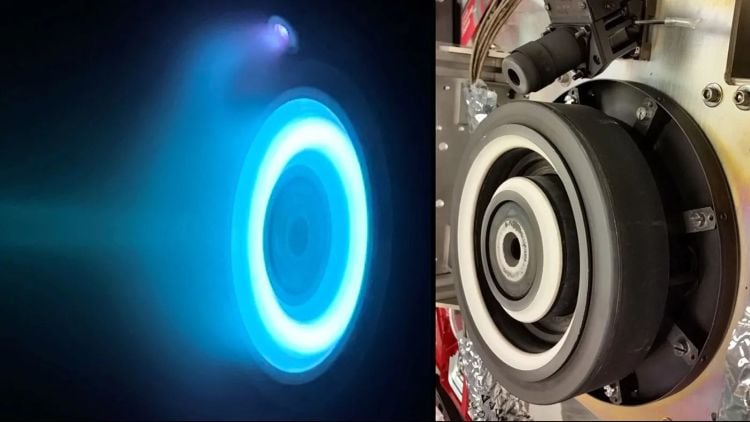
NASA’s lithium‑plasma electric thruster hit 120 kW in a test, a record that brings megawatt‑class propulsion for future Mars missions into view.
Context NASA’s electric propulsion program has moved from laboratory concepts to a demonstrator that can operate at power levels far beyond any current spacecraft. The test used lithium metal vapor as propellant, a departure from the xenon gas used in most ion thrusters. Electric thrusters generate thrust by accelerating charged particles with electricity, allowing continuous low‑thrust acceleration while using far less propellant than chemical rockets.
Key Facts The thruster produced 120 kW, roughly 25 times the power of the Psyche mission’s Hall‑effect thrusters, which are the most powerful electric engines in operation today. James Polk, senior research scientist at NASA’s Jet Propulsion Laboratory, said the test confirmed the design works at its target power and provides a solid testbed for scaling up. The engine withstood temperatures above 2,800 °C, matching the thermal environment expected in long‑duration operation.
A crewed Mars architecture calls for 2–4 MW of electric thrust, equivalent to running several of these units for more than 23,000 hours—about 2.6 years of continuous operation. That duration reflects the total travel and surface stay time of a typical Mars mission, which includes a 6–9 month outbound leg, an 18‑month surface stay, and a similar return leg, all constrained by the two‑year launch window.
What It Means Reaching 120 kW validates the lithium‑plasma concept and shows that scaling to megawatt levels is technically plausible. Higher power translates directly into faster transit times or reduced propellant mass, both critical for human missions where launch mass drives cost. If NASA can bundle multiple thrusters to achieve the 2–4 MW range, spacecraft could shave months off the journey, potentially reshaping mission timelines and crew safety margins.
The next milestone will be a multi‑thruster test at megawatt power, demonstrating long‑duration reliability and integration with spacecraft power systems. Success there will bring the vision of a crewed Mars voyage powered by electric propulsion from theory to engineering reality.
Continue reading
More in this thread
Conversation
Reader notes
Loading comments...