Mitsubishi Electric’s Remote‑Sensing Method Measures Soil Carbon Without Sampling
Mitsubishi Electric’s system estimates soil carbon without sampling, using optics and two models to support Japan’s GX Emissions Trading Scheme launching March 2027.
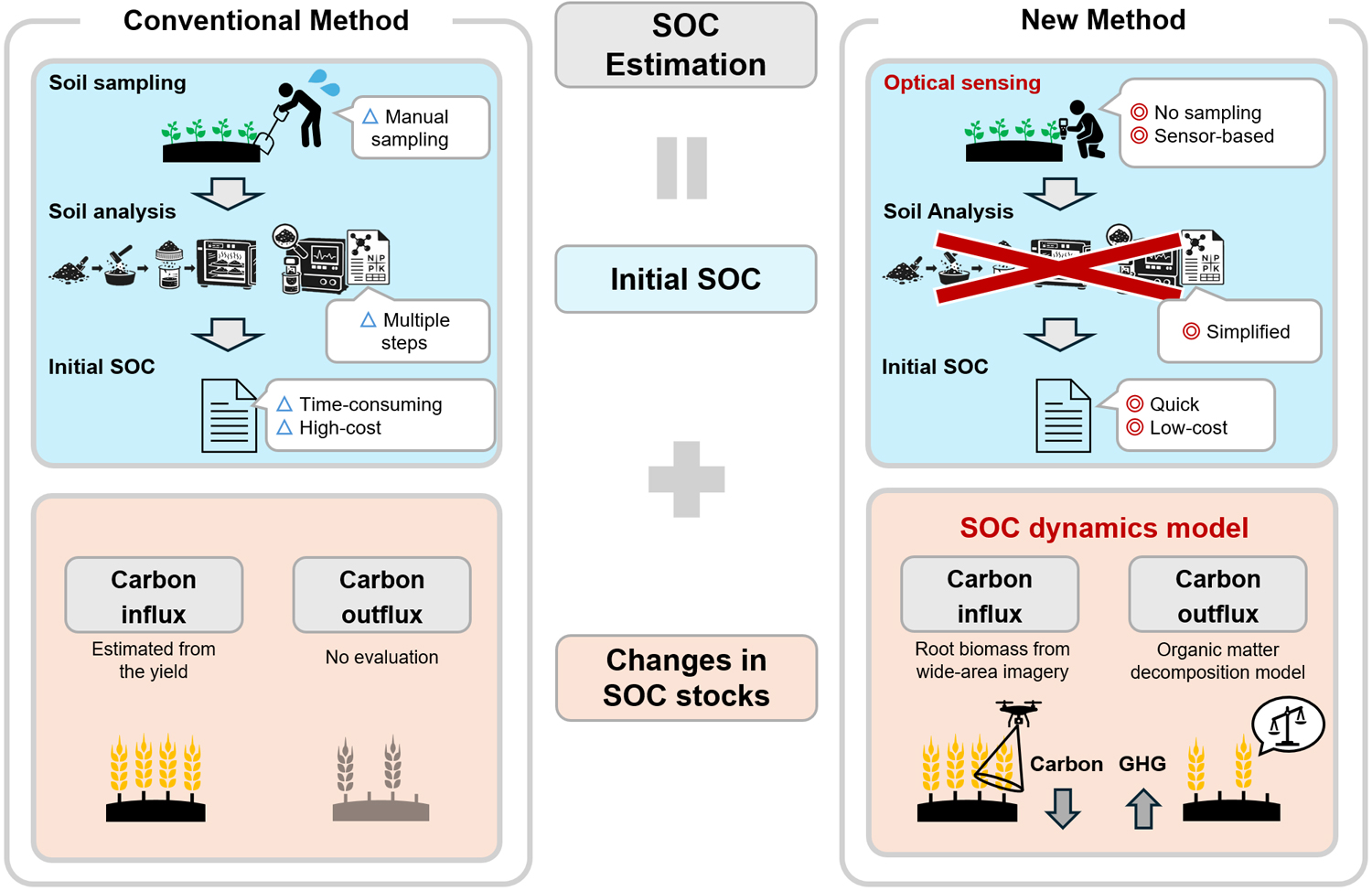
Comparison with conventional technology
TL;DR
Mitsubishi Electric unveiled a remote‑sensing system that estimates soil organic carbon without taking physical samples, using aerial optics and two simulation models. The approach was validated in Hokkaido and is slated to feed Japan’s GX Emissions Trading Scheme, which launches fully in March 2027.
Context Soil organic carbon (SOC) measures the amount of carbon stored in farmland soils and is a key metric for climate‑smart agriculture. Traditionally, SOC assessment requires extracting soil cores, transporting them to a laboratory, and performing chemical analyses, a process that can take days and limits how often and over what area measurements can be taken. Mitsubishi Electric’s method replaces those steps with light‑based readings collected from satellites or drones and two computer models that simulate the biological processes that drive SOC changes.
Key Facts The system combines optical reflectance data from remote‑sensing platforms with a root‑biomass model and a microbially mediated decomposition model. The root‑biomass model estimates how much plant root material is present and how it changes over time, influencing carbon inputs to the soil. The decomposition model simulates how soil microbes break down organic matter, estimating the rate at which carbon is released or retained. By feeding satellite‑derived vegetation indices and ground‑based spectrometer readings into these models, the technology reproduces SOC dynamics across entire fields without any need for soil extraction. A field demonstration in Toyotomi‑cho, Hokkaido, confirmed that the approach can evaluate SOC over large agricultural tracts at lower cost and with higher accuracy than conventional core‑sampling methods. Japan’s GX Emissions Trading Scheme, which will allow companies to trade carbon credits to meet emissions‑reduction targets, is scheduled to be fully operational by the fiscal year ending March 2027. The SOC data produced by Mitsubishi Electric’s system is intended to serve as objective, third‑party verifiable evidence for agriculture‑based credits within that scheme.
What It Means Farmers and regulators obtain a faster, less expensive tool to verify carbon‑sequestration practices, which could broaden participation in emerging carbon markets. As the GX‑ETS nears its launch date, Mitsubishi Electric plans to run additional demonstrations on different crop types and regions, aiming to refine model accuracy and expand the technology’s applicability. Stakeholders should watch for results from those upcoming pilots and any regulatory guidance that links SOC measurements to credit issuance before the March 2027 deadline.
Continue reading
More in this thread
CO2 Hits Record 431 ppm as NOAA Faces Funding Cuts That Threaten Mauna Loa Monitoring
Dr. Leo Tanaka
Mitsubishi Electric’s Soil Carbon Tech to Feed Japan’s 2027 Emissions Trading Scheme
Dr. Leo Tanaka
Ancient tooth proteins reveal Denisovan‑Homo erectus interbreeding
Dr. Leo Tanaka
Conversation
Reader notes
Loading comments...