Minnesota House Approves Independent Inspector General Bill 127-5
Minnesota House approves a bill creating an independent Inspector General with subpoena and fund‑freezing powers, moving the measure toward final enactment.
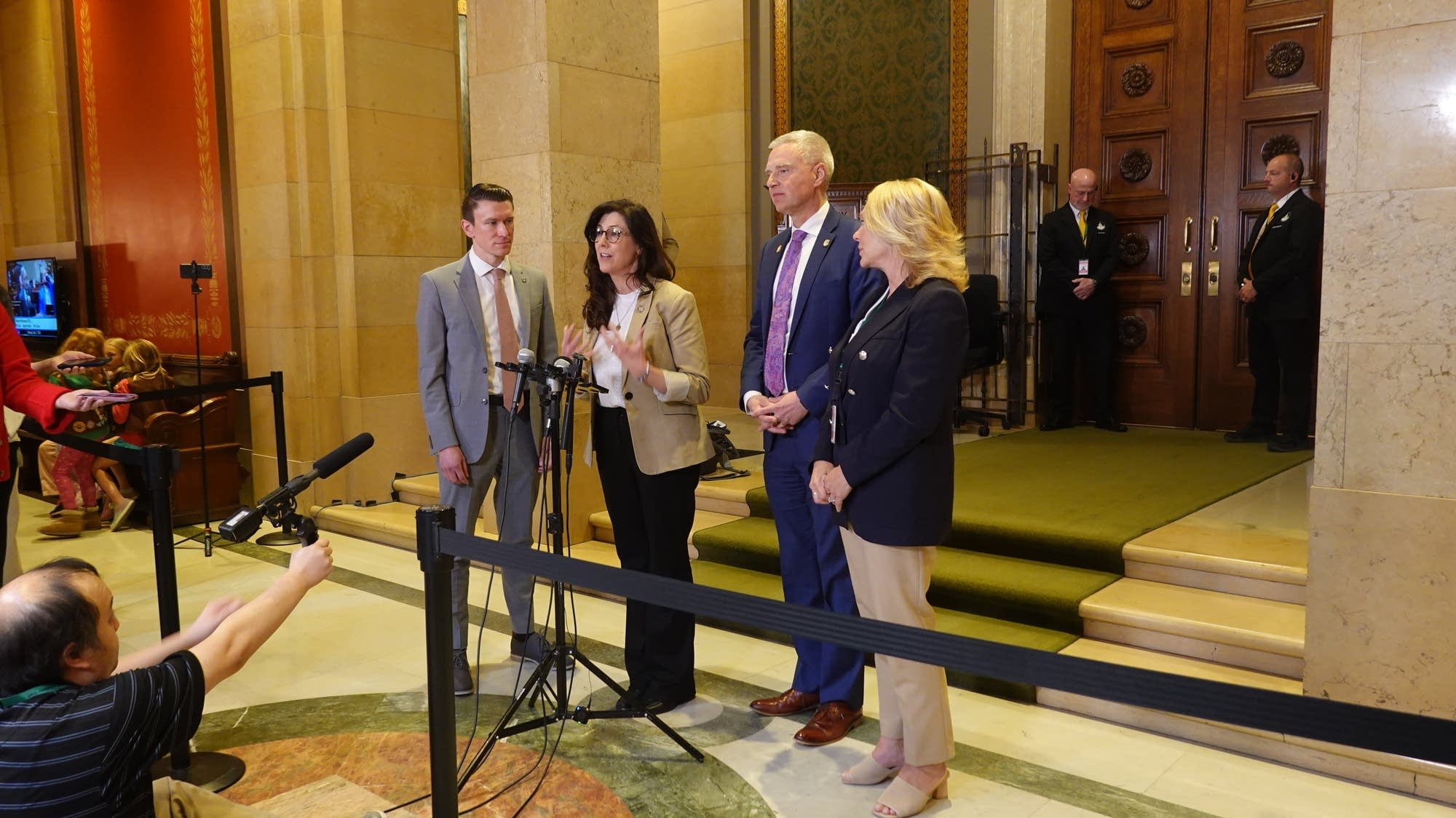
four lawmakers speaking to press at capitol
TL;DR
The Minnesota House approved the Independent Office of Inspector General bill 127‑5, giving the new agency subpoena authority and the power to freeze state funds.
The Minnesota legislature is close to establishing a statewide Office of Inspector General (OIG) that can investigate fraud, waste, and abuse across state agencies, grant recipients, and contractors. The bill, designated SF 856, passed the House with a 127‑5 vote, reflecting broad bipartisan support.
Key facts: - The House vote of 127‑5 cleared the bill for the Senate’s final review. - The Senate originally passed the measure on May 8, 2025, by a 60‑7 margin. - Senator Aric Putnam (DFL‑St. Cloud) co‑authored the legislation and emphasized that Democratic‑Farmer‑Labor (DFL) lawmakers helped craft a functional bill.
The proposed OIG will operate independently of existing state agencies. Its powers include issuing subpoenas—legal orders compelling testimony or documents—and, with a court order, freezing or halting the distribution of state funds. Those tools aim to stop fraudulent schemes before money is disbursed, rather than merely reporting findings after the fact.
Minnesota would join more than a dozen states that already have a statewide OIG with similar enforcement capabilities. Proponents argue the office will protect taxpayer dollars and deter fraud by providing a rapid response mechanism. Critics have previously warned that an overly powerful inspector could impede legitimate agency work, but the bipartisan vote suggests the current design balances oversight with operational independence.
The bill now returns to the Senate for concurrence early next week before heading to the governor’s desk for signature. If signed, the OIG could be operational within the next fiscal year, giving Minnesota a new tool to monitor the flow of public funds.
What to watch next: The Senate’s final vote and the governor’s decision will determine whether the OIG becomes law, and how quickly its enforcement powers will be deployed.
Continue reading
More in this thread
Conversation
Reader notes
Loading comments...