Merz Links Climate Action to Global Security, Cautions Against Industrial Harm Before COP31
German Chancellor Merz states climate policy is essential for global security, warns against deindustrialization from climate actions, ahead of COP31 discussions.
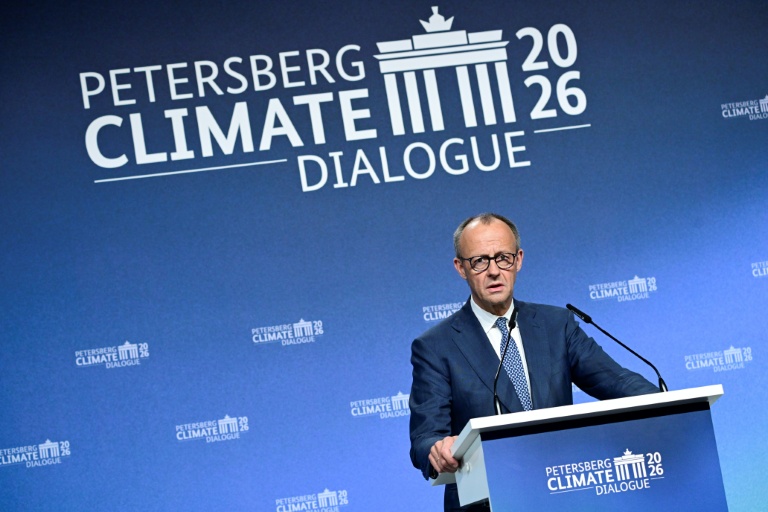
German Chancellor Friedrich Merz delivers a speech during the Petersberg Climate Dialogue in Berlin
German Chancellor Friedrich Merz declared climate policy vital for global security, linking global warming directly to intensified conflicts worldwide. He affirmed Germany's role as a reliable partner at the upcoming COP31 while cautioning against climate protection policies that could harm the nation's industrial base.
Germany's commitment to climate goals remains firm, a stance reinforced by Chancellor Merz during recent discussions. These statements underscore a broader strategy that views environmental action as integral to international stability and economic health. The global community prepares for the 31st Conference of the Parties (COP31) in Antalya, Türkiye, an event central to advancing international climate agreements.
Merz asserted that climate policy functions as a policy for global security and prosperity. He stated that the progression of global warming actively intensifies existing conflicts and threatens to trigger new ones. This establishes a direct correlation between environmental stability and geopolitical peace.
Germany will participate as a reliable partner at the upcoming COP31 climate conference. This commitment signals Germany's dedication to collaborative solutions on the international stage. The nation intends to contribute significantly to addressing climate change through innovation and technology.
However, Merz also cautioned against climate protection policies that might damage Germany's industrial foundation. He warned that a transformation leading to deindustrialization – the decline in a country's industrial activity – would not gain public acceptance. Such an outcome, he noted, would ultimately hamper innovation crucial for effective climate solutions.
Chancellor Merz's remarks outline a dual imperative for Germany: pursue ambitious climate action while safeguarding its economic engine. His emphasis on security positions climate change not merely as an environmental issue but a core component of foreign policy. The upcoming COP31 will reveal how Germany navigates these priorities, balancing global climate leadership with domestic industrial concerns. The world will watch for concrete proposals that align these objectives.
Continue reading
More in this thread
Russian Strikes Across Eight Ukrainian Regions Kill Five, Injure Thirty
Nadia Okafor
Palantir Workers Warn of 'Descent into Fascism' as Software Powers Trump Deportations
Nadia Okafor
Israel Continues Attacks in Southern Lebanon, Killing Four Despite Ceasefire Extension
Nadia Okafor
Conversation
Reader notes
Loading comments...