Madison County Tests Air‑Gapped Tabulators on Nearly 100 Ballot Types at 75 Votes per Minute
Madison County demonstrated that offline tabulators can handle nearly 100 ballot variations at 75 votes per minute, confirming accuracy before the election.
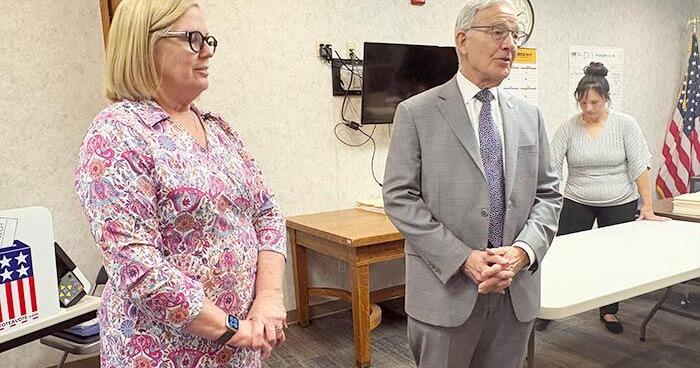
Bob Evnen
TL;DR
Madison County ran a full‑scale test showing its air‑gapped tabulators can accurately count nearly 100 ballot formats at a rate of roughly 75 ballots per minute.
Context In a dedicated room at the Madison County Courthouse, election staff fed pre‑marked ballots into tabulation machines this week. The exercise was not a vote count but a routine logic and accuracy test required before every statewide election in Nebraska. Officials paired machine tallies with hand counts to verify that the systems report the correct totals.
Key Facts - The county uses almost 100 distinct ballot versions, reflecting variations in local races and voter precincts. - Tabulation machines processed the test ballots at about 75 per minute, a speed that supports rapid counting on Election Day. - State officials emphasized that the machines are air‑gapped: they have no internet connection and cannot be linked to any network. Results are transferred via encrypted flash drives to isolated computers before being uploaded to reporting systems. - After each test run, staff generated a “zero report” to confirm no residual data remained in the machines. Ballots were prepared with joggers, devices that align paper to prevent feeding errors. - County Clerk Anne Pruss noted that her office conducts more verification steps than the state mandates, including manual recounts of the same ballots to ensure perfect agreement.
What It Means The successful demonstration confirms that Madison County’s voting infrastructure can handle the logistical complexity of nearly 100 ballot designs without sacrificing speed or accuracy. The air‑gapped configuration eliminates a common cyber‑security risk, while the dual verification—machine and hand count—provides a robust safeguard against errors. As the county prepares for the upcoming election, officials will rely on the same workflow: sealed ballot boxes, encrypted data transfers, and standby bipartisan boards to recreate unread ballots.
Watch for the first official results on Election Night, when the county’s layered verification process will be put to the test in real time.
Continue reading
More in this thread
Conversation
Reader notes
Loading comments...