LSU Team Shows How Lunar Dust Chemistry Can Slash Space Mission Costs
LSU researchers use a lithium‑hydride reaction to pull aluminum, iron and silicon from moon dust, reducing launch weight and energy needs for Artemis and Mars missions.
TL;DR
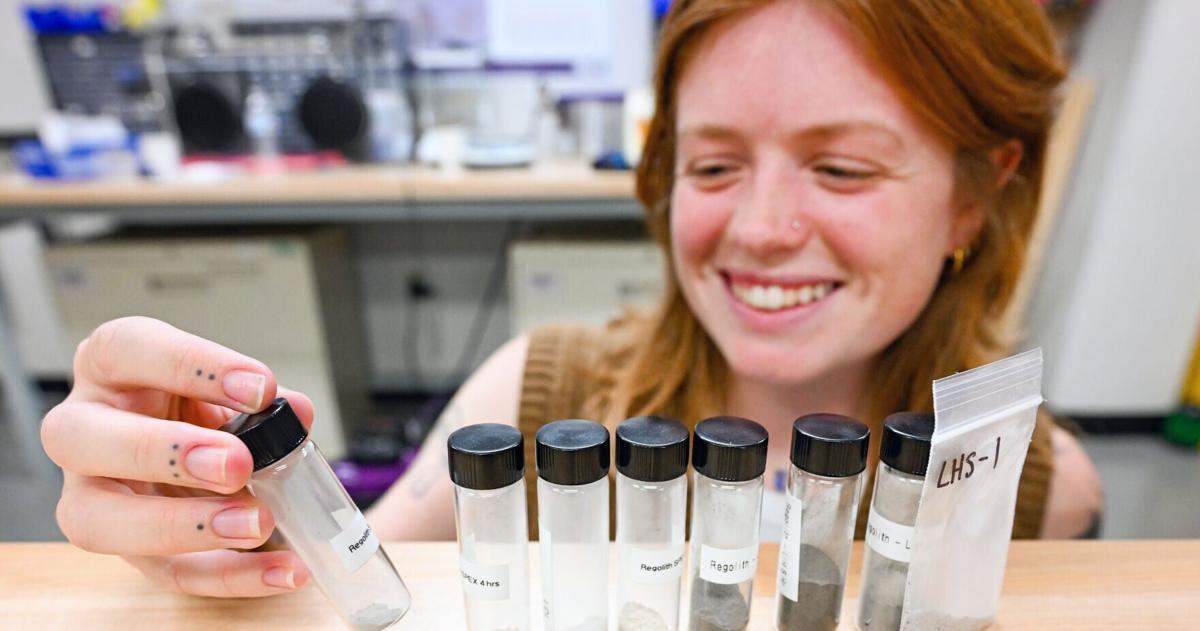
LSU Ph.D. student Emma McCarthy demonstrates a lithium‑hydride‑based thermite reaction that pulls key metals from lunar regolith, cutting the mass and energy required to bring building materials from Earth.
Context NASA’s Artemis program aims to sustain a long‑term presence on the Moon, but every kilogram launched from Earth costs tens of thousands of dollars and consumes large amounts of fuel. Using local resources—known as in‑situ resource utilization (ISRU)—can lower those costs. McCarthy’s work focuses on the fine dust, or regolith, that covers the lunar surface, which contains oxides of aluminum, iron and silicon.
Key Facts McCarthy states that transporting materials from Earth is costly and energy‑intensive, so using lunar resources is preferable. Her research employs a lithium‑hydride‑based chemical reaction to extract aluminum, iron and silicon from lunar regolith. The process begins by grinding simulated lunar regolith—sourced from Space Resource Technologies to mimic the Moon’s south pole—into a fine powder with a ball mill. Lithium hydride is mixed with the powder; when ignited, the thermite reaction releases heat exceeding 2,500 °C, reducing the metal oxides and freeing the pure metals. The reaction also produces usable heat that could power equipment on site. McCarthy received a NASA award administered by the Louisiana Space Grant Consortium to support this ISRU research.
What It Means By producing structural metals directly on the Moon, mission planners could reduce launch mass by up to half, lowering fuel requirements and freeing payload capacity for scientific instruments or habitats. The method is more energy‑efficient than conventional oxide‑splitting techniques and leverages a reaction already used on Earth for railroad repairs. If scaled, the approach could support Artemis base construction and later be adapted for Mars missions using similar dust chemistry.
Watch for upcoming tests that scale the reaction to larger batches and integrate the extracted metals into 3D‑printed components for lunar habitats.
Continue reading
More in this thread
Carbon Pricing Covers 29% of Global Emissions, Raising $107 Billion in 2025
Dr. Leo Tanaka
UK May Heat Record Shatters at 33.5°C as France Issues First-Ever May Heat Alerts
Dr. Leo Tanaka
UK May Heat Record Hits 33.5°C as France Issues First May Heat Alerts
Dr. Leo Tanaka
Conversation
Reader notes
Loading comments...