Lost 1912 Roosevelt Speech Page with Bullet Holes Found in Pennsylvania
Historian uncovers Roosevelt’s 1912 speech page with bullet holes, valued at $150,000. Details on discovery, significance, and what comes next.
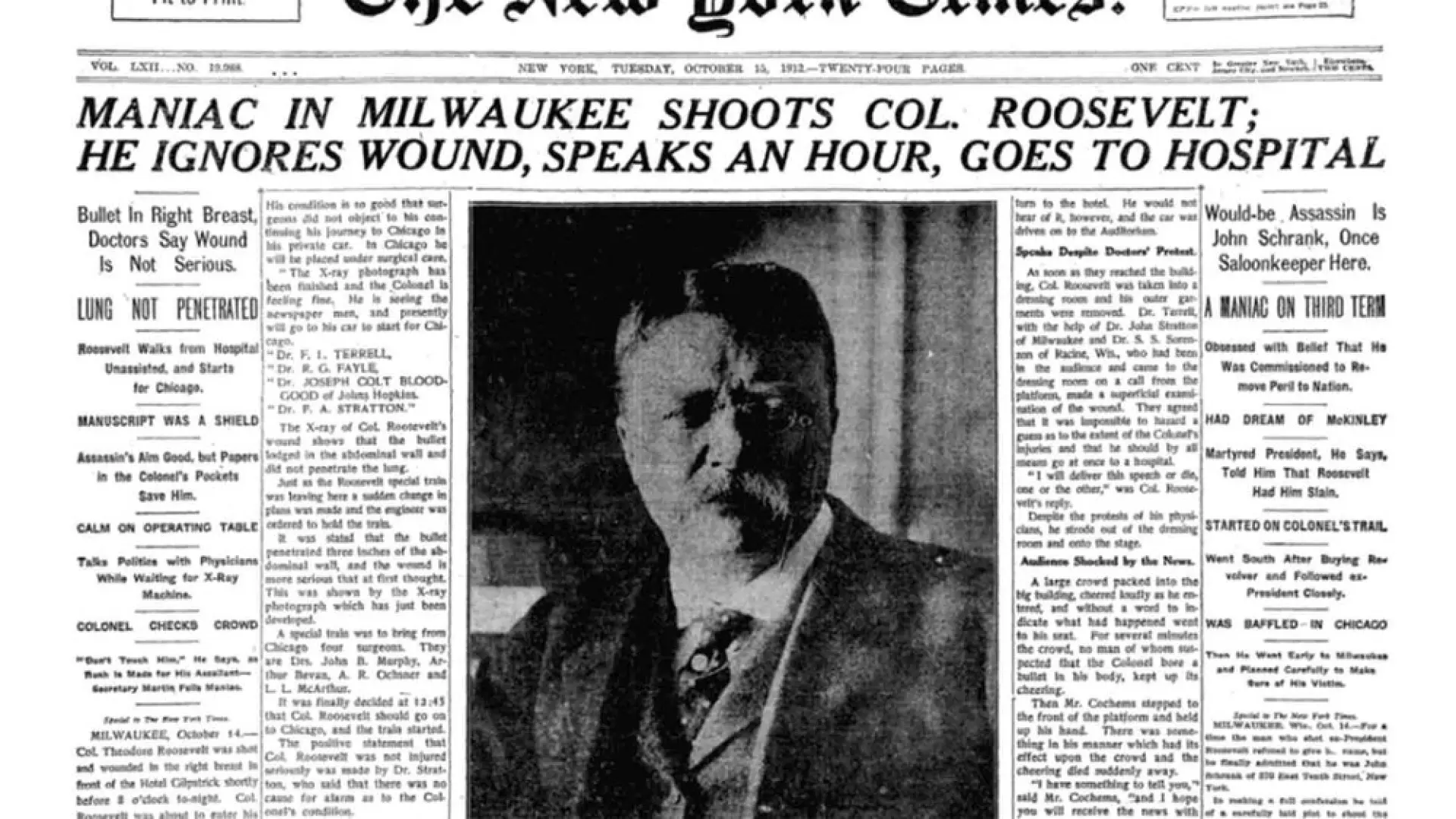
newspaper
TL;DR
A Pennsylvania historian has located the opening page of Theodore Roosevelt’s 1912 campaign speech that stopped a bullet and saved his life. The sheet bears two bullet holes and is valued at $150,000.
Context
On October 14, 1912, Roosevelt was campaigning in Milwaukee when John Schrank fired a revolver at him. The bullet passed through a thick speech manuscript in Roosevelt’s breast pocket, slowed by the paper, and lodged in his metal spectacles case. Though wounded, Roosevelt delivered his address before seeking medical help. The manuscript was later split, and only a few pages have surfaced over the past century. The incident remains a vivid example of political violence in early‑20th‑century America.
Key Facts
The newly found page is the first sheet of that speech, signed by Roosevelt and marked with his handwritten note: “This is one of the manuscript sheets through which the bullet went at Milwaukee. TR.” It displays two clear bullet holes. Nathan Raab of the Raab Collection appraises the document at $150,000, noting it is more significant than the two other known pages because it is the introductory sheet and contains Roosevelt’s personal inscription. Raab says the page had been in a private New York family’s collection for about 75 years before resurfacing. The other two surviving pages are held in institutional archives and lack the president’s handwriting.
What It Means
The discovery offers a tangible link to a moment of political violence that did not deter a candidate from finishing his speech, underscoring how physical artifacts can shape public memory of historic events. Scholars may use the page to study Roosevelt’s immediate reaction to the attack and the broader climate of dissent in the 1912 election. The find also raises questions about what other undiscovered materials might exist in private holdings, potentially reshaping understanding of campaign artifacts from that era. Watch for further analysis as the Raab Collection plans to display the page at a upcoming presidential history exhibit and to publish a detailed study of its provenance.
Continue reading
More in this thread
Conversation
Reader notes
Loading comments...