Irish Government Commits €755 million to Fuel Relief Amid Protests
Dublin unveils €755 million in fuel supports for transport, agriculture and households amid protest backlash.
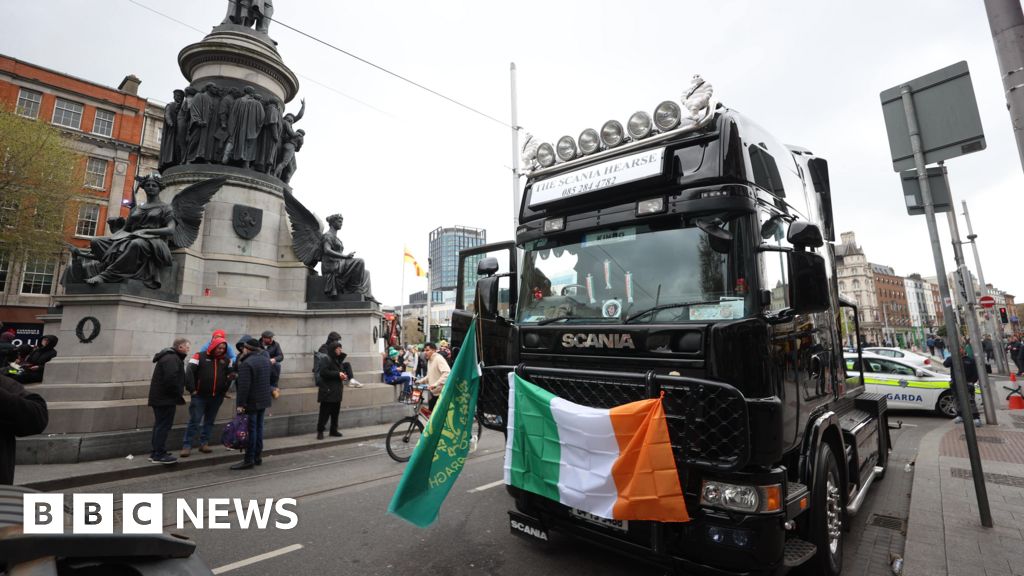
A large lorry with Irish flags attached to the front is parked in a busy street. There are men gathered around. Behind it are Garda (Irish police) cars.
TL;DR: Dublin has allocated €755 million in fuel relief, including a €120 million scheme for road transport operators, as protests over rising energy costs intensify.
The coalition government announced a fresh package of fuel supports after weeks of nationwide demonstrations that blocked motorways and Dublin’s main thoroughfares. Ministers say the measures were already in development before the protests, but the public pressure accelerated their rollout.
The Road Transporters Supports Scheme earmarks €120 million for hauliers, bus and coach operators. Payments are tiered by fleet size: €1,350 per vehicle for operators with up to five vehicles, €790 for those with six to 20, and €300 for fleets over 21. The scheme applies retroactively from March, triggered when the national diesel price exceeds €1.90 per litre, a level deemed unsustainable for commercial transport.
A second initiative, the Fuel Support Scheme, allocates €100 million to farmers, agricultural contractors and fishers affected by higher green diesel prices. Beneficiaries will receive roughly €0.20 per litre, or €200 per 1,000 litres, based on verified 2025 usage.
Together with earlier excise duty cuts on petrol and diesel, the total government outlay on fuel assistance now stands at €755 million. The finance ministry also postponed planned carbon‑tax hikes and launched a communications campaign to help households and businesses curb energy bills.
Opposition leaders criticize the response as insufficient. Sinn Féin’s Mary Lou McDonald warned that households are struggling to pay electricity bills and called for universal energy credits and an emergency budget. Taoiseach Micheál Martin rejected the critique, insisting the package is “time‑bound and targeted.”
The measures aim to stabilize commercial transport costs and protect key rural sectors while the government balances fiscal sustainability. Monitoring will focus on how quickly applications are processed, the impact on diesel prices, and whether further relief will be needed as household energy pressures persist.
Continue reading
More in this thread
Conversation
Reader notes
Loading comments...