Iran Threatens Force Against US as Trump Launches Project Freedom in Hormuz
Iran warns of attacks on foreign forces in the Strait of Hormuz as the US launches Project Freedom with 15,000 troops to escort stranded ships.
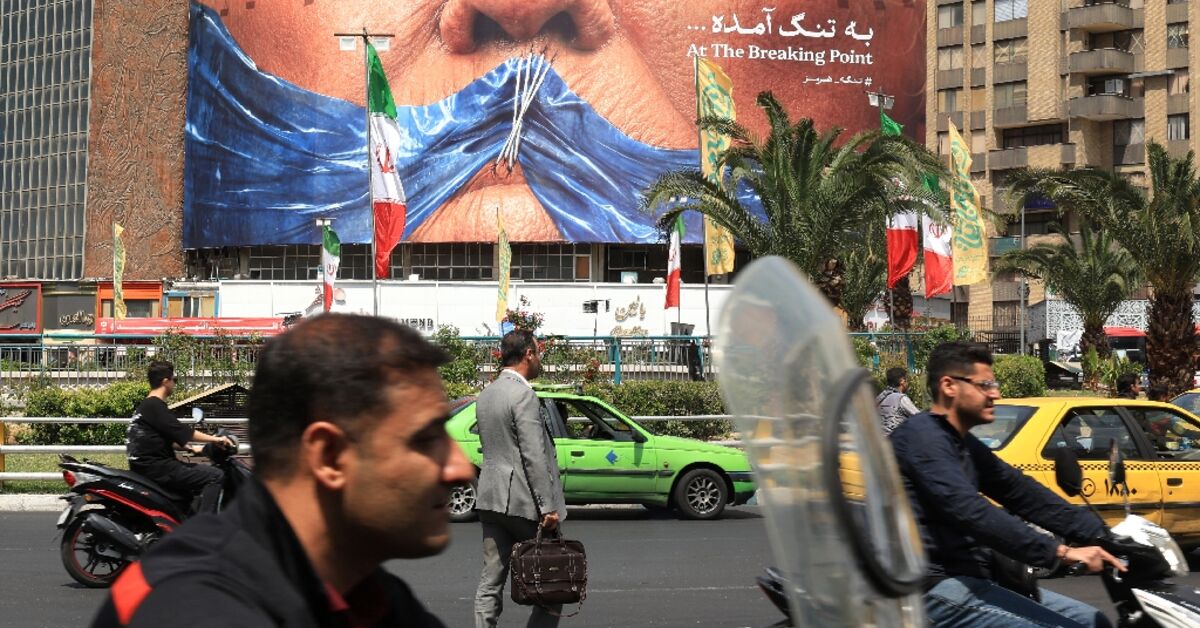
Commuters make their way past an anti-US billboard referring to President Donald Trump and the Strait of Hormuz, installed on a building at the Valiasr Square in Tehran
TL;DR
Iran says any foreign armed forces entering the Strait of Hormuz will be attacked; the United States will begin Project Freedom on Monday, deploying 15,000 troops, 100 aircraft and naval assets to guide stranded ships.
Context The Strait of Hormuz, a 21‑mile-wide chokepoint linking the Persian Gulf to the open ocean, handles roughly a fifth of global oil shipments. Since early April, Iran has limited commercial traffic, prompting a surge in fuel prices worldwide. President Donald Trump announced a new U.S. effort to open the waterway for vessels stuck amid the blockade.
Key Facts - Iran’s unified military command warned that “any foreign armed forces, especially the aggressive US army, will be attacked” if they approach or enter the strait. The statement, issued by commander Ali Abdollahi, also urged commercial ships to coordinate with Tehran before moving. - Trump declared the launch of Project Freedom on Monday, describing it as a humanitarian mission to free ships “low on food and essential supplies.” He framed the operation as a response to requests from “neutral and innocent bystanders” whose crews face deteriorating conditions. - U.S. Central Command (CENTCOM) committed 15,000 service members, more than 100 land‑ and sea‑based aircraft, warships and drones to support the escort mission. Admiral Brad Cooper called the deployment essential for regional security and the global economy. - The United Kingdom Maritime Trade Operations (UKMTO) maintains a critical security level in the strait and advises vessels to consider routing through Oman’s waters, where the U.S. has set up an enhanced security zone.
What It Means Iran’s explicit threat raises the risk of a direct clash between its forces and the U.S. contingent slated for Hormuz. The presence of thousands of troops and a sizable air and naval fleet could deter Iranian interdiction, but it also increases the chance of miscalculation, especially given Iran’s extensive drone inventory and small‑craft capabilities. Analysts warn that any encounter could quickly expand, pulling both sides into a broader confrontation.
The operation tests Trump’s strategy of easing the Iranian blockade while maintaining pressure through a naval presence. Observers will watch for the first escorted convoy, Iranian naval activity, and any diplomatic signals from Tehran or Washington that could either de‑escalate or intensify the standoff.
*Watch for the outcome of the inaugural Project Freedom convoy and any Iranian response in the coming days.*
Continue reading
More in this thread
Conversation
Reader notes
Loading comments...