Iran’s Foreign Minister Blames U.S. for Collapsed Negotiations Amid Diplomatic Tour
Iranian Foreign Minister Abbas Araghchi stated U.S. demands caused negotiations to fail. President Trump called for Iran to initiate contact as regional tensions remain high, including 14 deaths in Lebanon.
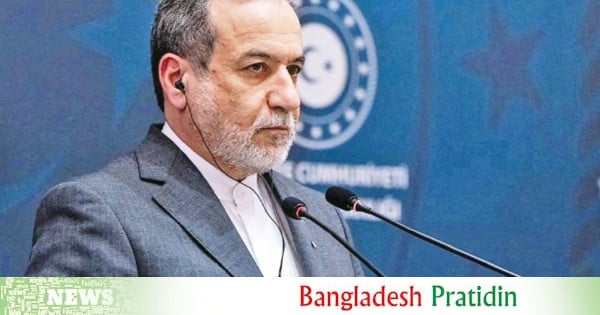
Iran FM blames US for failed peace talks in Pakistan, Iranian state media reports
Iran's Foreign Minister Abbas Araghchi blamed U.S. approaches for the collapse of direct negotiations, citing excessive demands. U.S. President Donald Trump stated Iran must initiate contact for any future talks, while regional violence persisted, notably with 14 deaths in southern Lebanon.
Iran's top diplomat, Abbas Araghchi, attributed the failure of recent negotiations to the United States on Monday, speaking from Saint Petersburg during a diplomatic tour. This statement followed a period of stalled direct talks between Washington and Tehran, despite a fragile ceasefire in the wider conflict. Araghchi’s tour included visits to Oman, Russia, and Pakistan, the latter having hosted the previous round of unsuccessful discussions.
Foreign Minister Araghchi stated that U.S. approaches caused the prior negotiation round to fail, despite some progress, due to "excessive demands." This accusation comes after U.S. President Donald Trump canceled a planned trip by his envoys. Trump later told Fox News that Iran must initiate contact for any future talks, suggesting they could come to the U.S. or call directly.
The Strait of Hormuz remains a central point of contention and economic concern. Iran has maintained a blockade of the crucial waterway, disrupting global flows of oil, gas, and fertilizer, leading to increased prices. In response, the U.S. has imposed its own blockade on Iranian ports. The Iranian Revolutionary Guards have publicly stated their intention to maintain control of the Hormuz, viewing its deterrent effects over America as a "definitive strategy." Iran reportedly passed written messages to the U.S. via Pakistan, outlining red lines that included both nuclear issues and the Strait of Hormuz. One reported proposal from Iran, cited by U.S. media, suggested reopening the Strait of Hormuz and ending the U.S. naval blockade, while postponing nuclear negotiations.
Regional instability continued despite the ceasefire. Lebanon's health ministry reported 14 people killed in Israeli strikes in southern Lebanon on Sunday. This incident marked the deadliest day since the ceasefire began, highlighting ongoing tensions between Israel and Iran-backed Hezbollah.
The current diplomatic landscape shows a clear impasse, with both sides placing conditions on resuming direct engagement. Despite backchannel communications and reported proposals, a formal path forward remains undefined. The continuing violence in Lebanon underscores the fragility of regional ceasefires amidst broader geopolitical tensions. Observers will watch for any shifts in direct communication or further escalation in critical regions like the Strait of Hormuz.
Continue reading
More in this thread
Conversation
Reader notes
Loading comments...