Iran’s Food Inflation Surges to 115% as Cooking Oil Prices Leap 375%
Iran reports 115% food inflation and a 375% rise in solid vegetable oil prices amid war and sanctions, straining households.
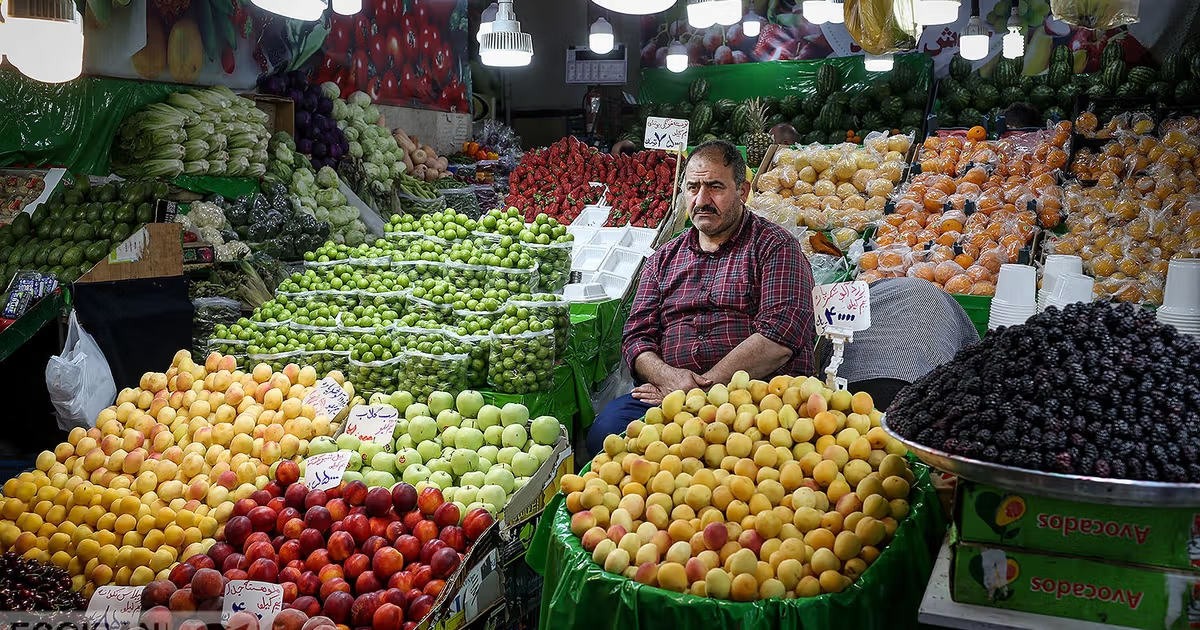
TL;DR: Iran’s food inflation hit 115% year‑on‑year in the first month of the Persian calendar, driven by a 375% surge in solid vegetable oil prices.
Context Iran faces a dual shock: a U.S. naval blockade that chokes trade and an ongoing war that strains supply chains. The rial, Iran’s currency, has slid to roughly 1.77 million per U.S. dollar, eroding purchasing power for ordinary families.
Key Facts The Statistical Center of Iran reported a 115% increase in food prices for Farvardin, the first month of the Persian year, compared with the same period last year. Solid vegetable oil, a staple for cooking, rose 375% over the year, while liquid cooking oil climbed 308%. Imported rice jumped 209%, domestic rice 173%, and chicken 191%. The lowest hikes were seen in butter (48%), infant formula (71%) and pasta (75%).
President Masoud Pezeshkian told officials that citizens must “realistically understand the country’s conditions and restrictions.” He linked the price spikes to the war that began in late February and warned that cooperation and national cohesion are essential to address the crisis.
The state Consumers and Producers Protection Organization labeled the recent oil price hikes “illegal” and ordered a return to previous levels, though enforcement mechanisms remain unclear. Government subsidies and electronic vouchers now total less than $10 per person per month, a figure officials consider raising despite a strained budget.
What It Means With food inflation outpacing overall inflation, households are allocating a larger share of shrinking salaries to basic items. The sharp rise in cooking oil—essential for most meals—exacerbates food insecurity and fuels public discontent. While the government blames the war and external pressure, the lack of a comprehensive macro‑economic stabilization plan leaves the market vulnerable to further spikes.
Looking Ahead Watch for policy moves on price controls, subsidy adjustments, and any diplomatic developments that could ease the blockade and stabilize the rial.
Continue reading
More in this thread
Conversation
Reader notes
Loading comments...