India Sets Fixed 200 ml‑5 L Edible‑Oil Pack Sizes to curb Shrinkflation
India's Consumer Affairs Department proposes standard 200 ml‑5 L oil packs, backed by 90% of the industry, to improve price transparency and curb shrinkflation.
India Sets Fixed 200 ml‑5 L Edible‑Oil Pack Sizes to curb Shrinkflation
TL;DR
India’s Consumer Affairs Department will enforce fixed edible‑oil pack sizes ranging from 200 ml to 5 L, aiming to stop shrinkflation and simplify price comparison.
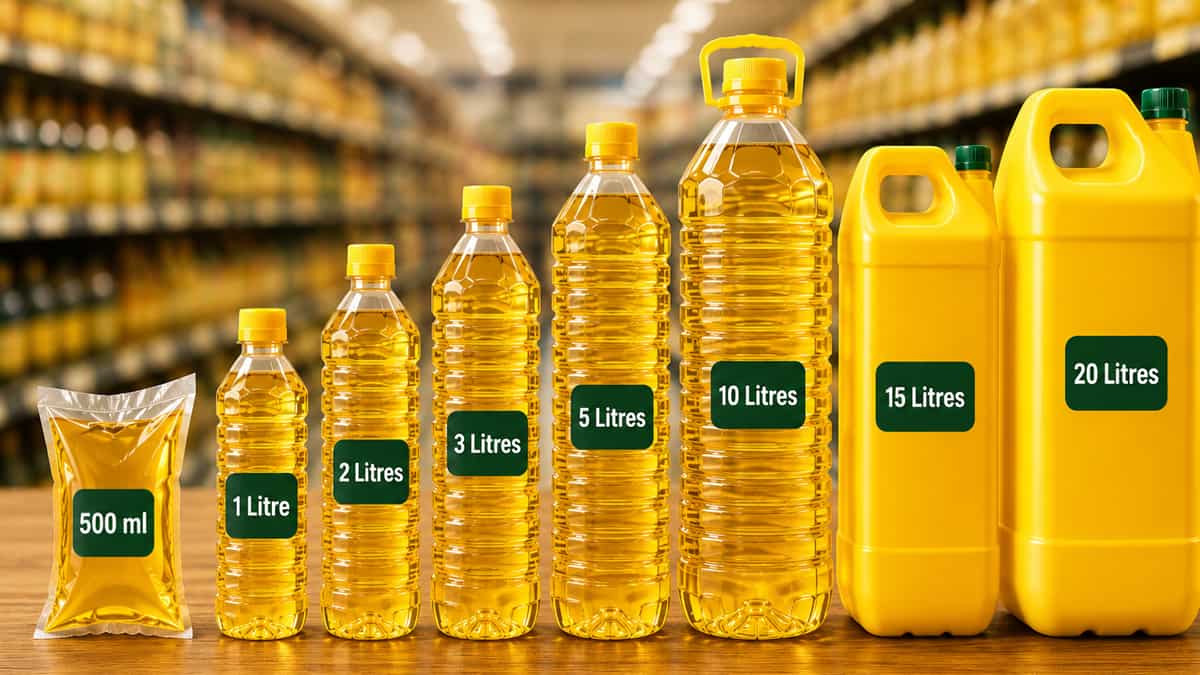
Context On 20 May 2026 the Department of Consumer Affairs convened a stakeholder meeting to address irregular oil packaging that obscures true cost. Consumers often face non‑standard quantities—650 g, 810 g, 870 g—that look like familiar bottles but hide reduced volumes. The department’s legal metrology reform seeks to replace these fractional sizes with a clear, uniform grid.
Key Facts - The proposal defines three categories: small consumer packs of 200 ml and 500 ml; retail packs of 1 L, 2 L, 3 L, 4 L, and 5 L; bulk or institutional packs of 15 L/15 kg and 20 L/20 kg. - Major industry bodies—including SEA, SOPA, IVPA, COOIT and MOPA—representing roughly 90 % of the edible‑oil sector have endorsed the standardisation plan. - The framework covers ten oil types, from palm and soybean to mustard and blended oils, applying equally to domestic and imported products. - A three‑month transition window will let manufacturers adjust filling lines and clear existing inventory. Packs under 200 ml, as well as certain niche oils, remain exempt to preserve low‑cost sachet options.
What It Means Standardised pack sizes force firms to display price per litre or kilogram on a comparable basis, reducing the ability to shrink volume while keeping the same visual packaging. Consumers can now compare a 1‑L bottle of sunflower oil with a 1‑L bottle of mustard oil without guessing hidden quantity changes. For regulators, a fixed size list simplifies inspections and enforcement, potentially speeding up compliance checks across states.
Logistically, uniform containers can streamline warehousing and transport, lowering handling costs for producers and retailers. However, small and medium‑sized oil makers will need technical support to re‑tool equipment within the short transition period. Policymakers will have to monitor whether the exemptions for sub‑200 ml packs effectively protect low‑income shoppers while still curbing shrinkflation.
Looking ahead, watch for the final rule’s publication and the first compliance audits, which will reveal how quickly the market adapts to the new packaging regime.
Continue reading
More in this thread
Walmart Shares Drop 7% After Q1 Revenue Beat as Fuel Costs Dent Profit
Elena Voss
Wix to Cut 1,000 Jobs After $57.5 Million Q1 Loss, While Base44 Hits $150 Million ARR
Elena Voss
Huawei’s One‑Fits‑All 2.0 Solar+Storage Platform Debuts at Third Global C&I Visionaries Summit
Elena Voss
Conversation
Reader notes
Loading comments...