India Launches Binding Carbon Credit Scheme as CSE Rolls Out Rs. 30,000 Training on Carbon Accounting
India launches its first legally binding Carbon Credit Trading Scheme, setting emission targets for nine sectors. This move coincides with CSE's new Rs. 30,000 carbon accounting training program.
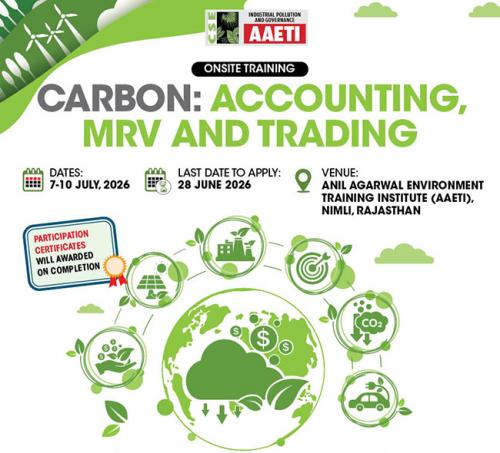
India has launched its first legally binding Carbon Credit Trading Scheme, setting emission targets for nine key industrial sectors. This regulatory shift coincides with the Centre for Science and Environment offering a Rs. 30,000 training program to build essential carbon accounting and trading expertise.
The global push for climate action now transitions industrial compliance from voluntary efforts to mandatory obligations. India has implemented its Carbon Credit Trading Scheme (CCTS), establishing the nation's first legally binding greenhouse gas (GHG) emission intensity targets. This initiative aims to align nine industrial sectors with India's 2030 Nationally Determined Contribution (NDC) goals, which are national climate action targets.
India's new Carbon Credit Trading Scheme sets specific GHG emission intensity targets. These targets compel the identified sectors to reduce their environmental impact, supporting the country's broader climate commitments for the next decade.
Internationally, regulations such as the European Union's Carbon Border Adjustment Mechanism (CBAM) are also taking effect. These mechanisms impose financial penalties on carbon-intensive exports from countries without their own carbon pricing systems, adding another layer of pressure on Indian industries.
Responding to this evolving regulatory landscape, the Centre for Science and Environment (CSE) now offers an intensive three-and-a-half-day training program. This program focuses on Carbon Accounting, Monitoring, Reporting and Verification (MRV), Trading, and Decarbonisation. The training costs Rs. 30,000, equipping participants with crucial skills.
This new environment transforms emission management from a voluntary initiative into a legal and economic imperative for Indian industries. Companies must now precisely measure, manage, and report their carbon footprint, necessitating updated knowledge and robust internal systems. The CSE program directly addresses this capacity gap, equipping professionals with the essential skills for compliance, accurate auditing, and strategic decarbonization pathways.
Observers will monitor the initial impact of the CCTS on industrial emissions and the potential expansion of the scheme to additional sectors.
Continue reading
More in this thread
Pronto Secures $20 Million Funding at $200 Million Valuation Amid Surging Indian Home-Service Orders
Elena Voss
Amazon’s $5 Billion Anthropic Bet Highlights a Week Where Only Half of Mega‑Rounds Passed $100 Million
Elena Voss
Pronto Secures $20M Funding at $200M Valuation Amid Surge to 25K Daily Orders
Elena Voss
Conversation
Reader notes
Loading comments...