Immature Lunar Regolith Shows Little Change After 900 Rover Wheel Passes
Study shows minimal change in Moon dust simulant after 900 rover wheel passes, suggesting suitability for lunar roadways.
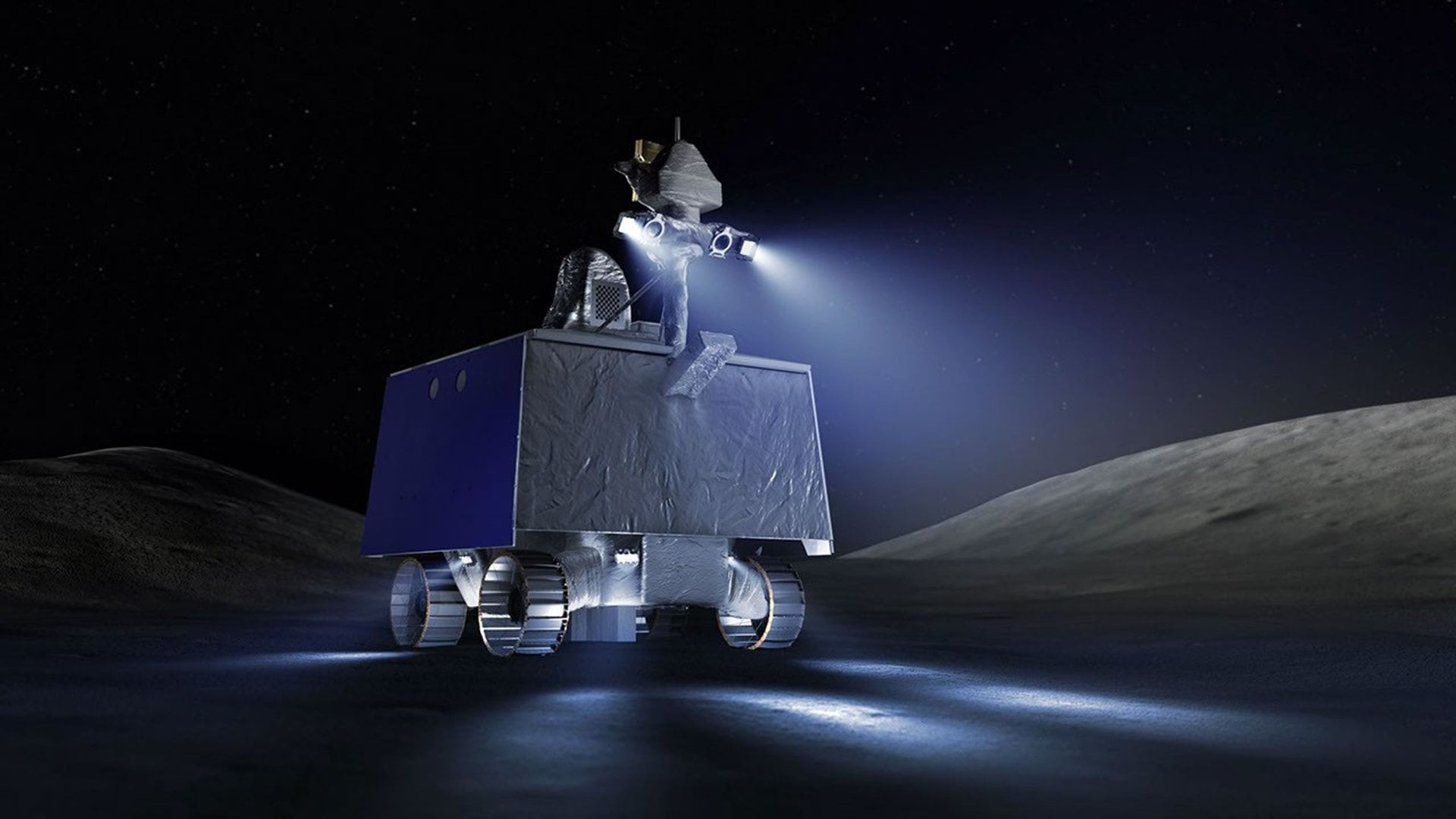
Artist's impression of NASA's Volatiles Investigating Polar Exploration Rover (VIPER) concept. Credit: NASA/Daniel Rutter
**TL;DR** After up to 900 passes of three different rover wheel designs on a simulant of immature lunar regolith, the material showed virtually no change in particle size or shape. The results suggest that early‑stage Moon dust can support repeated rover traffic without degrading the surface.
**Context** NASA’s Artemis program, ESA’s Moon Village, and the Sino‑Russian ILRS aim to establish a sustained human presence on the Moon. Mission planners worry that lunar regolith—fine, electrostatically charged dust—can damage equipment and harm astronaut health. Understanding how the soil behaves under rover traffic is essential for building safe routes and habitats.
**Key Facts** Researchers Vanesa Muñiz Lloréns of the University of Notre Dame and Michael Lucas of the UCF Exolith Lab presented their work at the 2026 Lunar Planetary Science Conference. They used the RIDER terramechanics testbed at UCF’s Exolith Lab and tested three wheel designs: Astrobotic’s Polaris Prototype, a Resource Prospector prototype similar to VIPER, and a replica of the Apollo Lunar Roving Vehicle wheels. Each wheel made up to 900 passes on a two‑layer column of LHS‑1E simulant about 35 cm tall, under simulated lunar gravity. Surface samples were taken before testing and after every 100 passes. Analysis of particle size and shape revealed minimal alteration even after the maximum number of passes; any observed variation was minor and linked to wheel material or geometry.
**What It Means** The stability of immature regolith under repeated wheel traffic indicates it could serve as a base for lunar roadways, reducing dust generation and preserving rover traction. This finding supports the idea that early‑stage highland or south‑pole soils may withstand the wear expected from Artemis‑era vehicles. However, the study notes that the influence of wheel design on particle‑scale morphology remains poorly understood, leaving room for further investigation.
**What to Watch Next** Future work will need to test mature, space‑weathered regolith and longer run‑times to see if the same resilience holds under more realistic lunar conditions.
Conversation
Reader notes
Loading comments...