Home Office Minister Blames Extremists for Hijacking Pro‑Palestinian Marches as Government Moves to Ban Al Quds Day
Home Office minister says fringe actors have turned pro-Palestinian rallies into hate platforms as the UK bans Al Quds Day march, the first protest ban since 2012.
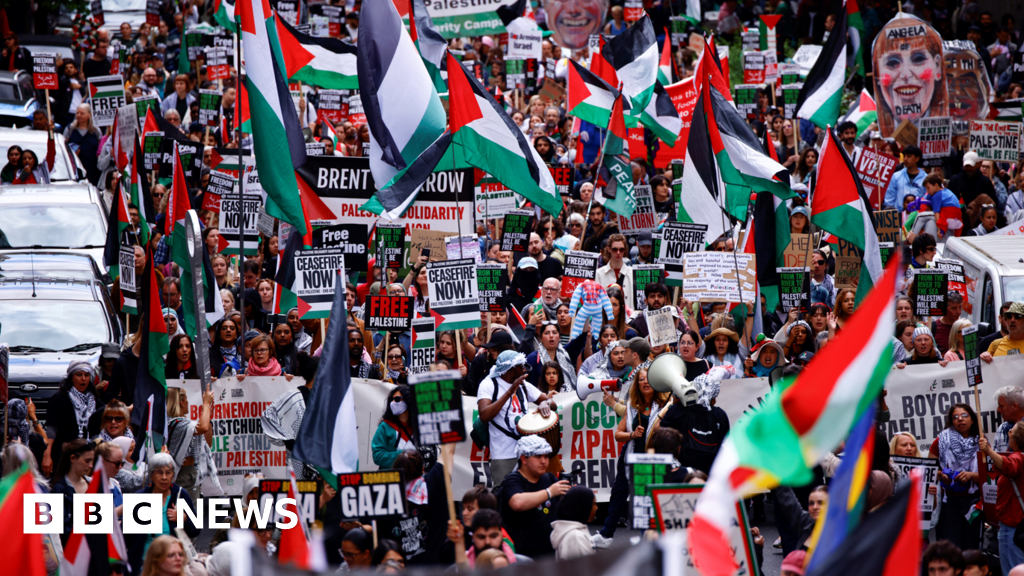
Protesters hold placards and wave Palestinian flags as they take part in a "National March for Gaza" in central London in 2024
TL;DR: A Home Office minister says extremist elements have hijacked pro‑Palestinian marches, and the government has approved a ban on the Al Quds Day rally in London – the first protest ban in over a decade.
Context Pro‑Palestinian demonstrations across the UK have faced growing scrutiny after a stabbing attack on two Jewish men in Golders Green was classified as a terror incident. Chief Rabbi Sir Ephraim Mirvis and terrorism‑law reviewer Jonathan Hall have called for temporary bans, arguing the events provide a fertile ground for antisemitic rhetoric.
Key Facts Home Office minister Alex Davies‑Jones told the BBC that “certain individuals” have seized the marches to spread division, hatred and intimidation. She cited chants calling for a “global intifada” – a phrase linked to the 1987 Palestinian uprising and viewed by many Jewish groups as a call for violence – as evidence of antisemitic activity. While affirming the right to protest, Davies‑Jones stressed that not all participants share extremist views.
Police in England and Wales can restrict protests when they anticipate serious public disorder, but a full ban requires Home Secretary approval. Last month the government granted the Metropolitan Police request to prohibit the Al Quds Day march in London, marking the first outright ban on a protest march since 2012. Metropolitan Police chief Sir Mark Rowley said his force will use every legal tool to maximise safety ahead of upcoming demonstrations, including the Nakba Day march on 16 May and a far‑right “Unite the Kingdom” rally the same day.
The Golders Green stabbing, declared a terror attack, has intensified debate over protecting British Jews. Sir Ephraim Mirvis urged an immediate ban on future marches, while Hall called for a moratorium, arguing current conditions make it “impossible” to prevent antisemitism from incubating.
Opposition groups such as the Stop the War Coalition, which helped organise previous pro‑Palestinian rallies, condemned all forms of antisemitism but rejected linking the marches to violent attacks. They warned that blanket bans could infringe on legitimate dissent.
What It Means The approval of the Al Quds Day ban signals a willingness by the UK government to intervene when protests are deemed a security risk, despite the legal rarity of such action. With more large‑scale rallies scheduled, police will likely test the limits of existing public‑order powers, while civil‑rights advocates monitor any erosion of protest freedoms. The next weeks will reveal whether the government pursues further restrictions or reverts to a more permissive stance.
*Watch for official statements on any additional protest bans and the outcome of the pending public‑order legislation review.*
Continue reading
More in this thread
Conversation
Reader notes
Loading comments...