Herzog Pushes to Triple Israel‑Kazakhstan Trade and Deepen Abraham Accords
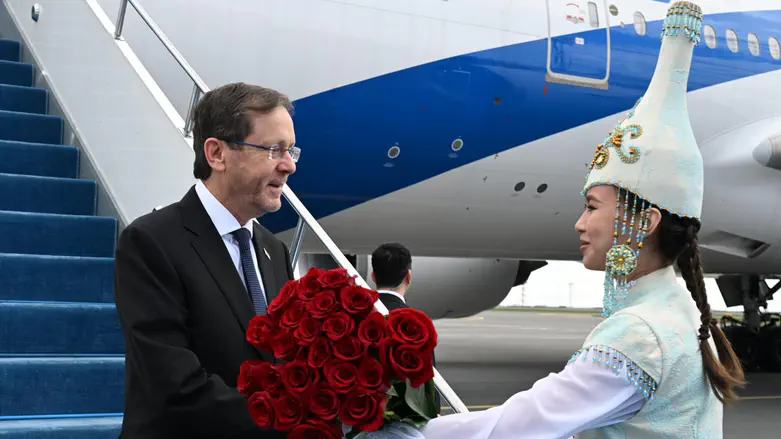
Israeli President Herzog and Kazakhstan's president set a goal to triple bilateral trade and expand the Abraham Accords during a visit to Astana.
Israel National News
TL;DR
Israeli President Isaac Herzog and Kazakhstan’s president agreed to aim for a three‑fold increase in bilateral trade and to expand cooperation under the Abraham Accords.
Context Israel and Kazakhstan have maintained diplomatic relations since 1992, but only joined the Abraham Accords—a 2020 agreement normalizing ties between Israel and several Muslim-majority states—in November 2025. The Accords promise economic, security and technological collaboration among signatories.
Key Facts Herzog arrived in Astana on Monday and held a formal meeting with President Kassym‑Jomart Tokayev. Both leaders announced a joint goal to triple the value of Israel‑Kazakhstan trade within the next five years, citing opportunities in agriculture technology, water management and defense equipment. The discussion also covered extending the Abraham Accords framework to include joint research projects and regional security dialogues. During the visit, Herzog attended services at Astana’s synagogue and met with local Jewish community leaders, underscoring Israel’s outreach to diaspora groups in Central Asia. The synagogue visit marked the first time a sitting Israeli president has entered a Kazakh place of worship. Kazakhstan’s accession to the Accords last November followed a series of high‑level exchanges that sought to balance its traditionally close ties with Russia and China with new partnerships in the West and Israel.
What It Means Tripling trade could push annual exchange volumes from roughly $1 billion today to $3 billion, reshaping Kazakhstan’s export profile toward Israeli high‑tech solutions. Expanded Accords cooperation may also give Israel a foothold in Central Asian security networks, while offering Kazakhstan access to Israeli cybersecurity and defense expertise. Both governments framed the agenda as a model for pragmatic diplomacy with Muslim‑majority nations, emphasizing concrete economic projects over symbolic gestures. The next step will be a bilateral business forum slated for late 2026, where firms from both sides will pitch joint ventures.
Looking ahead, watch for the outcomes of the upcoming business forum and any formal agreements that translate the trade target into measurable contracts.
Continue reading
More in this thread
Nigeria’s Education Minister Flags 15 Million Out‑of‑School Children, Calls for Data‑Driven Reform
Nadia Okafor
Farage says Reform UK Pressure Prompted Labour's Bin Strike Truce
Nadia Okafor
Trump Administration Pays $1 Billion to Cancel Offshore Wind Projects, Shifts Funds to Oil and Gas
Nadia Okafor
Conversation
Reader notes
Loading comments...